
What led you to enroll in GraSPP?
After graduating from the Department of Architecture, I went on to GraSPP, then joined the Saitama Prefectural Government, and I am currently seconded to a town hall in Saitama Prefecture. One of the things that led me to GraSPP was my undergraduate graduation research and thesis work. I belonged to a laboratory in the Department of Architecture that dealt with building materials, and my research involved simulating how the ready-mixed concrete market moves—exploring what would happen if we ran simulations that also incorporated behavioral economics and other approaches. Through that exposure to behavioral economics, I entered GraSPP with the desire to study a little more about economics and the mechanisms of society as a whole.
Among the courses you took, are there any that left a deep impression?
I initially entered in the International Public Policy course, and at first I studied fields such as international relations and international law, which were extremely interesting subjects for someone from a science and engineering background. The classes themselves were fascinating, but with my future career in mind, I switched to the Public Management course. In the Public Management course, I continued to take International Public Policy classes while focusing mainly on courses in the STIG (Science, Technology, and Innovation Governance) program. Since my background was originally in engineering, I chose classes with an emphasis on content that had a strong affinity with it.
A lecture that stays with me was one on technology assessment, in which we took a single technology—such as a new technology—and evaluated it in terms of its usefulness, its risks, its social impact, and so on. I had learned about and understood aspects such as usefulness in my undergraduate studies, but as for what kind of impact a technology has on society—for example, I did research at the time on the theme of what kinds of technologies could be used to collect space debris. Even if you burn up space debris, what happens with the effects after it burns? What issues arise from the standpoint of international law? Analyzing such questions from comprehensive perspectives was a tremendous learning experience.
Before enrolling, I had hoped to be able to study politics, economics, and law all in a well-rounded way, and in terms of how fully that hope was actually realized, it was 120%. After enrolling, I was astonished at the breadth of fields covered by the courses on offer—“they even have classes like this?”
How is what you learned in graduate school, combined with your science and engineering background, being put to use in your current career?
As I work in local government today, I feel that what I learned at GraSPP—ways of thinking, perspectives for grasping things, admittedly quite abstract elements—is what is serving me in my current work.
I have always thought of “engineering” as a discipline for making something happen, and I approach my current work with the sense that the only difference is whether that something is a physical object or a social mechanism. When it comes to deciding from what angle to frame a problem with the materials at hand, and how to approach it, what I learned from both the engineering and public policy perspectives is serving me in my work.
Please share a message for students.
I believe “public policy” is a field that lets you survey society as a whole from a bird’s-eye view, whether you go into government or into the private sector. In that sense, from the standpoint of science and engineering × public policy, what makes public policy interesting is that when you want to learn about society after studying in the sciences, it is the field where you can learn the most broadly—the quickest way to learn about all sorts of things.
When it comes to working, I think it is extremely interesting to spend some time studying from the perspective of surveying society as a whole and examining the mechanisms by which the world operates, so I very much hope you will step into the field of public policy.
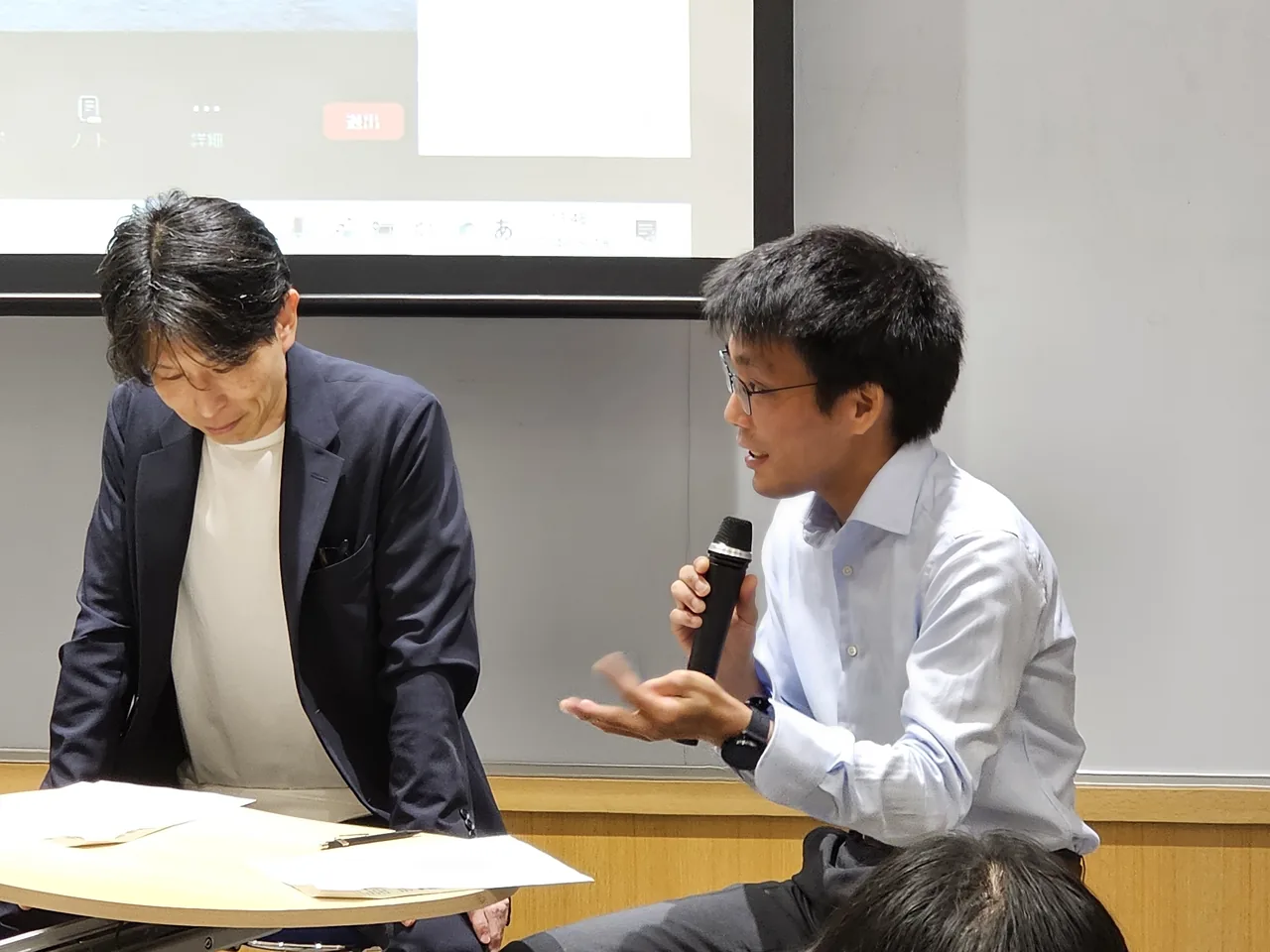
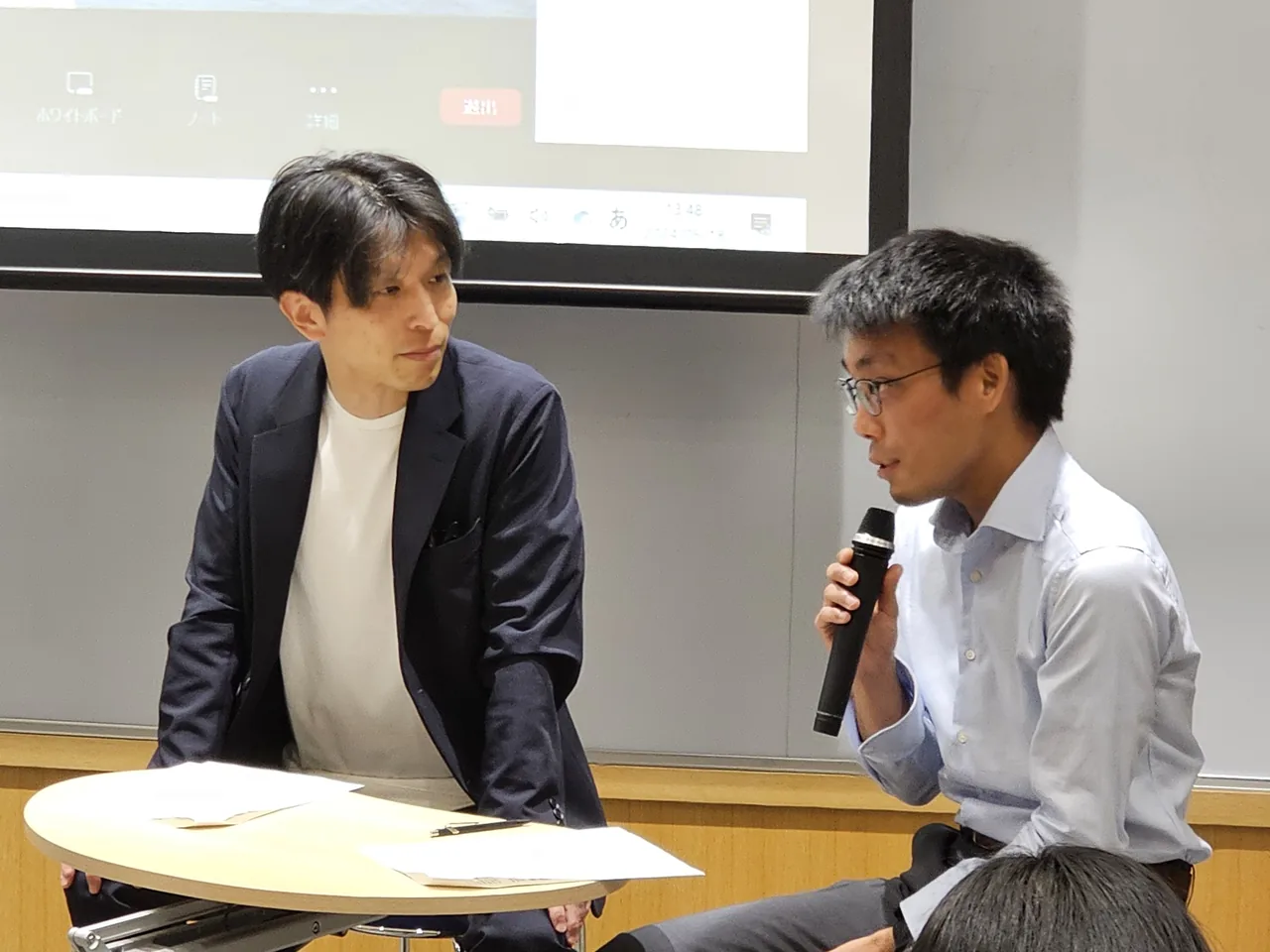
※ This article has been edited based on remarks delivered at the public policy talk “Science and Engineering × Public Policy” held on May 18, 2024.