

Becoming a TA after Taking a CAMPUS Asia Course
CAMPUS Asia is a program in which students from four universities—the University of Tokyo, Peking University, Seoul National University, and the National University of Singapore—interact through exchange study and double degree programs, in order to cultivate internationally minded people well versed in the field of East Asia. I myself was not a CAMPUS Asia Program student, but since I spent my early childhood in China and have specialized since my undergraduate days in diplomacy and security, including Japan–China relations, I participated last academic year in a CAMPUS Asia course as a student.
When I participated as a student, I remember that, in addition to the fun of debating with people who held different values, it was great fun to talk online between classes about each other’s countries and cultures, and about what had sparked our interest in CAMPUS Asia. On the other hand, the field trip was canceled due to the COVID-19 pandemic, and I was unable to speak offline with many of the students, so in that sense I cannot deny that some regret remained. Therefore, when Professor Hattori, the instructor in charge, offered me the TA position this time, I had high expectations, since classes would in principle be held face to face and there would also be the field trip that had long been impossible.
Japanese Students and International Students Thinking Together about Local Realities in Japan and Making Policy Proposals
The distinctive feature of the A-Semester CAMPUS Asia course is, above all, that Japanese students and international students debate with one another and tackle the problems of Japan’s regions. The significance of tackling Japan’s regional problems from an international perspective lies, I believe, in the fact that bringing in students from other parts of East Asia makes discussion from a more zero-based standpoint possible, and ideas from entirely different perspectives can emerge. True to form this time as well, the students came to tackle the local revitalization challenges of Obuse Town in Nagano Prefecture. And this time there was more: referring to the government’s “Vision for a Digital Garden City Nation” (Digi-den), they needed to consider how to make use of national resources while respecting the direction indicated there, and at the same time translate it down into strategies that a region could adopt. To that end, in addition to receiving lectures from town staff and private-sector business operators active in Obuse, the students carried out group work with serving national civil servants from the Ministry of Internal Affairs and Communications, the Cabinet Office, and elsewhere, and attended lectures, among other activities.
What was probably especially difficult for many students this time was the question of how to harmonize municipal administration with national policy. Naturally, each municipality has policies it wants to pursue, and the circumstances of the resources underlying them also differ from one to another. The policy fields that municipalities work on are wide-ranging: tourism, infrastructure, attracting businesses, DX, the environment, and more. However, with concentration in Tokyo already advancing and the declining birthrate, aging population, and depopulation progressing in many municipalities, the only way to make effective use of municipalities’ limited resources is for each to pick and choose what it wants to pursue from among these various conceivable policies. As a result, even though we speak uniformly of local revitalization, its aspect differs greatly by municipality. The Cabinet Office’s Digi-den, in view of such regional diversity, emphasizes the necessity of DX while respecting the autonomy of each municipality. Also, by providing a comprehensive variety of policy packages, it makes it possible to give different municipalities the different support they need.
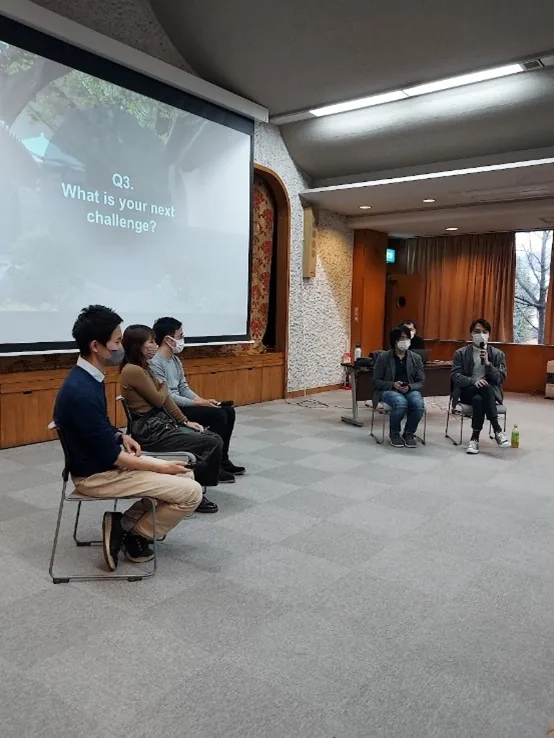
Digi-den seeks to meet the differing needs of each municipality through DX, but it is not necessarily the case that municipalities and the national government are acting in concert. There are mainly two criticisms of Digi-den from the municipal side: the first is that no concrete and clear direction can be seen in Digi-den, and the second is that the various application and review processes accompanying Digi-den, as well as the procedures for receiving subsidies from the national government, are cumbersome. My personal view is that the former, the lack of direction, is in a sense the result of the national government’s accommodation toward municipalities, and is inevitable. That is, one can also take the view that the national government, expecting autonomy from municipalities, has deliberately put forward a catch-all Digi-den. The problem is rather the latter. It became clear that for municipalities, spending their limited resources on coordination work with the national government carries a human burden greater than outsiders imagine. In the case of Obuse, for example, the section in charge of local revitalization, including Digi-den, has only two people. While Digi-den itself appears attractive, the burden of moving to implementation is heavy, and this has become the reason many local municipalities find it difficult to carry out policies in line with Digi-den.
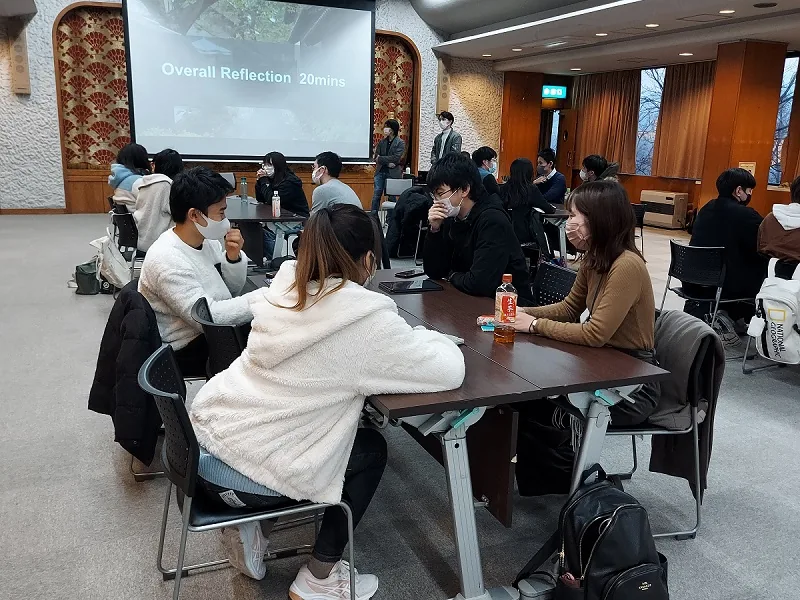
In this way, even the parties involved in municipalities and the government are tackling the theme of local revitalization as best they can, through trial and error, gradually accumulating success stories. And in such circumstances, a dozen or so students, including international students who had been in Japan only a few months, were to think up policies for harmonizing municipal administration with national policy. Naturally it was a difficult task even from an outside view, and even these students, who had studied public policy, at first seemed bewildered by the assignment they were given. Even so, in the end each group worked out its own recognition of the problems and its own solutions, and among them there were ideas unconstrained by existing frameworks, such as ones involving salary increases and extended terms for Obuse’s local revitalization staff. Of course, the policies proposed this time will not immediately be reflected in actual municipal administration or national policy. But I have no doubt that being able to think together, Japanese and international students alike, about local realities in Japan and make policy proposals is an experience hard to obtain outside CAMPUS Asia. Is the significance not great for people who will take the helm of society to participate in a program like this?
What I Felt Through the Course
The importance of speaking your own English with confidence
The greater part of my TA duties consisted of translating Japanese-language materials and interpreting presentations. I surmise this was because the guest lecturers did not have much experience with presentations or discussions in English and felt anxious about their own English ability. However, even with such people, as far as I could tell from listening to them actually speak in English, I did not sense much awkwardness in their phrasing. To digress a little, this is a phenomenon seen among GraSPP’s Japanese students as well. Not infrequently, Japanese students give up on taking English-taught courses out of the self-perception that “I cannot speak English,” and because of this their points of contact with international students fade. This becomes a lost opportunity. In that sense too, I think what is important is to speak your own English with confidence, without worrying too much about “English ability.” Indeed, it left a deep impression on me that the CAMPUS Asia Program students, despite almost all being non-native speakers, stated their own opinions with assurance.
Japan is “a country of Asia”
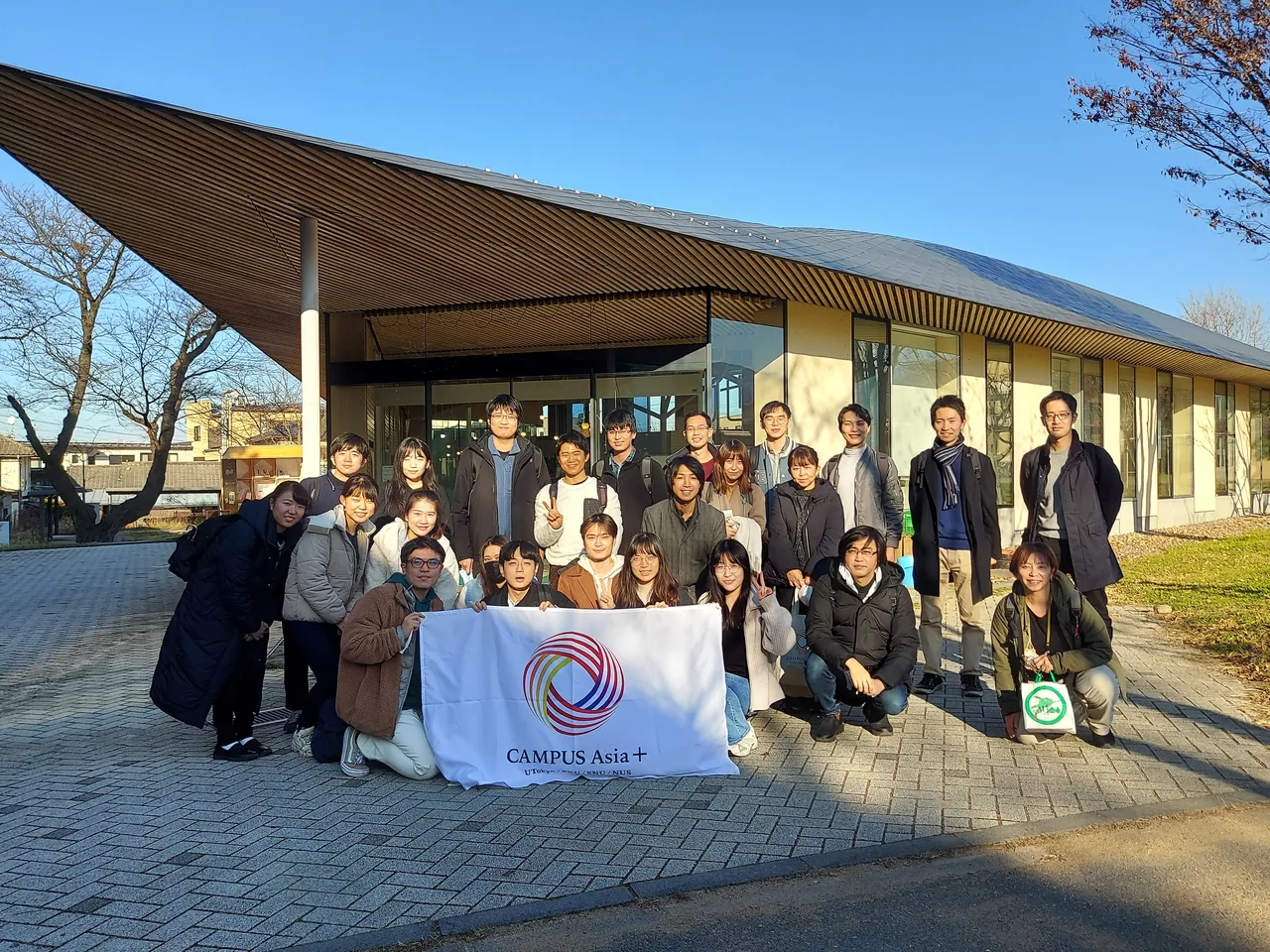
In fact, I believe this is by no means self-evident to many Japanese. Are there not quite a few people who feel resistance to placing Japan within the category of “countries of Asia”? As Japan declines in relative terms, I believe that to maintain its presence in international society it must live within the Asian region. Under these circumstances, I believe Japan should hold anew the self-awareness of being a member of the “countries of Asia” and deepen mutual understanding with the countries of East Asia. Not mere cultural exchange, and without falling into xenophobia, but first deepening understanding of neighboring countries and thereby understanding their patterns of behavior. For such people to increase in government and in the private sector alike serves Japan’s national interest—that is what I believe. CAMPUS Asia gives students who will shape the future of Japan the groundwork to become conscious of Japan’s position within Asia. In that sense, I felt the existence of this program to be deeply significant.
A very GraSPP-like course
That ambitious course content like this was possible is owed to nothing other than the presence of people thoroughly versed in the worlds of government and the private sector, beginning with Professor Hattori, the instructor in charge, and Hayashi-san, who was in charge of lectures. Looking back, not only in CAMPUS Asia but in a variety of courses, I have felt the benefits of such an environment. I feel I was truly fortunate to have been able to study at GraSPP.