
Introduction
“UTokyo is a magic mallet. If you strike it yourself, plenty of valuable experiences come out — but if you don’t strike it, you get nothing.”
I still remember these words, spoken to me by a classmate many years ago, when I was a first-year student commuting to the Komaba campus. Passive by nature, I cannot say I made particularly effective use of that “magic mallet.” The one thing such a person as myself managed to gain by acting proactively within UTokyo was study abroad in South Korea and China through the CAMPUS Asia Program.
I was born and raised in Japan, and my only overseas experience before studying abroad was a few trips abroad (about three weeks in total over my whole life) — a thoroughly domestic person. From the end of the university entrance exams until graduating from the Faculty of Law, I hardly used English at all; I was an ordinary UTokyo student. Even when I decided to study abroad in graduate school, I had no clearly defined goals for what I wanted to do at my destination; all I had was the naive prospect that studying abroad might somehow change my life. By introducing the experiences that such a person gained in South Korea and China through the CAMPUS Asia Program, I hope to make the program known to more UTokyo students, and I would be glad if this becomes an occasion for you to turn your eyes outside Japan.

What Is the CAMPUS Asia Program?
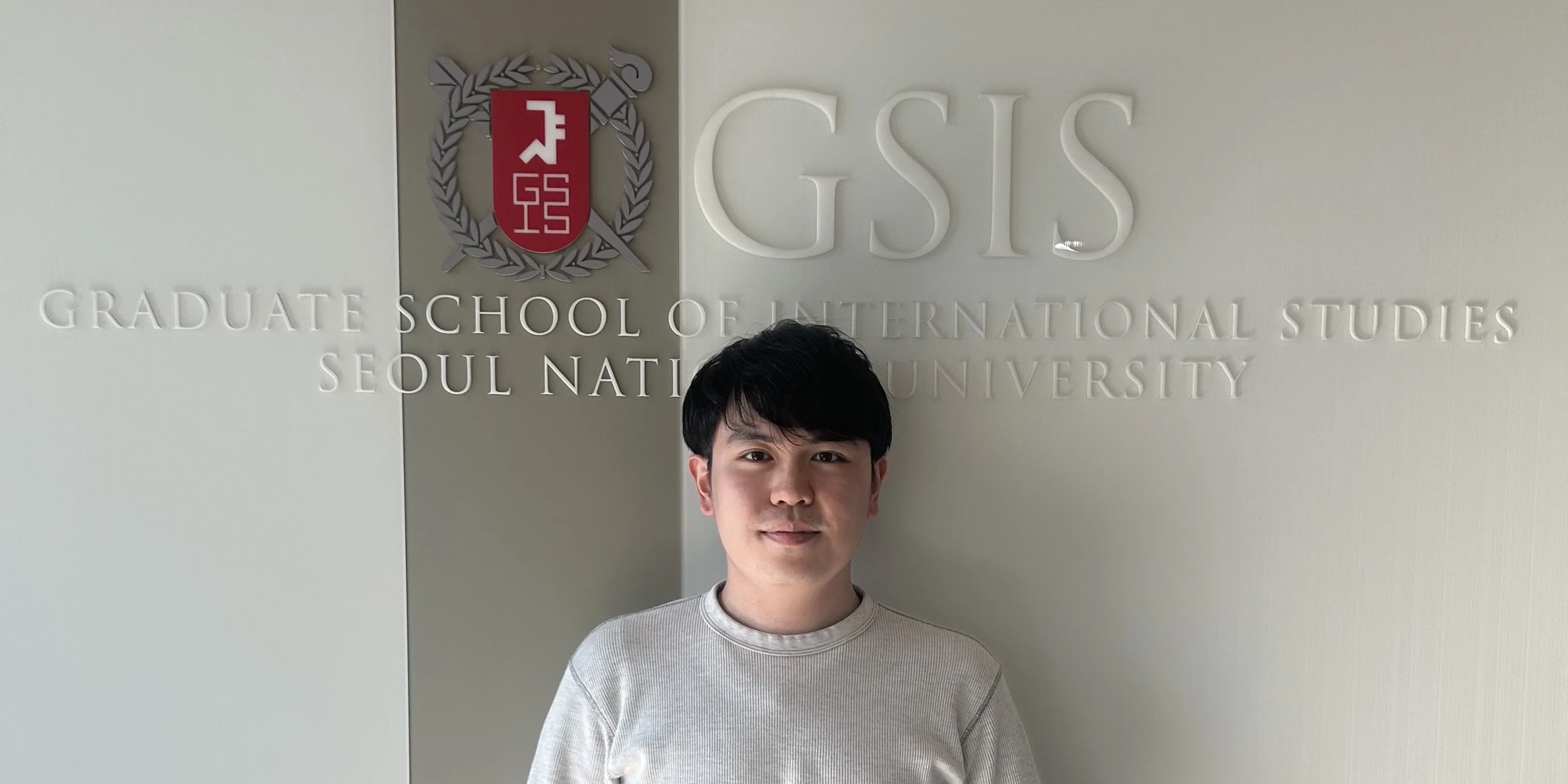
The CAMPUS Asia Program (hereafter CAP) is a program that aims to cultivate internationally minded professionals well versed in the East Asian region by having students from four countries — Japan, China, South Korea, and Singapore — interact, debate, and deepen their bonds. In the case of the University of Tokyo’s Graduate School of Public Policy, it partners with the Graduate School of International Studies at Seoul National University, the School of International Studies at Peking University, and the Lee Kuan Yew School of Public Policy at the National University of Singapore. CAP students at each graduate school are guaranteed the opportunity to spend six months to one year at each of two schools other than their home institution (for me, UTokyo), and I chose Seoul National University and Peking University.
What deserves special mention is that, of those two schools, one is an ordinary exchange, while at the other you can study toward a double degree (hereafter DD). I chose DD study at Seoul National University. In other words, through a program totaling two and a half years — one year at UTokyo, one year at SNU, and half a year in Beijing — you can obtain master’s degrees from both UTokyo and SNU. Being able to study abroad in two countries besides Japan is precious enough in itself, but you can even earn a degree from your host institution on top of that — an extremely attractive program.
What I Gained from Studying Abroad
Do you think that studying abroad without a clear purpose or goal is meaningless? When I was considering studying abroad, I often came across such claims. It is true that people who study abroad with a clear purpose — for example, wanting to study under Professor So-and-so, or to intern at an international organization — are strong. But there are always things you can only come to understand and feel by actually going there, rather than mulling things over in Japan. I want to champion a style of study abroad where you simply go, even without a particular field or problem you want to study. Below, I list what I actually felt and gained in South Korea and China.
Insights into South Korea
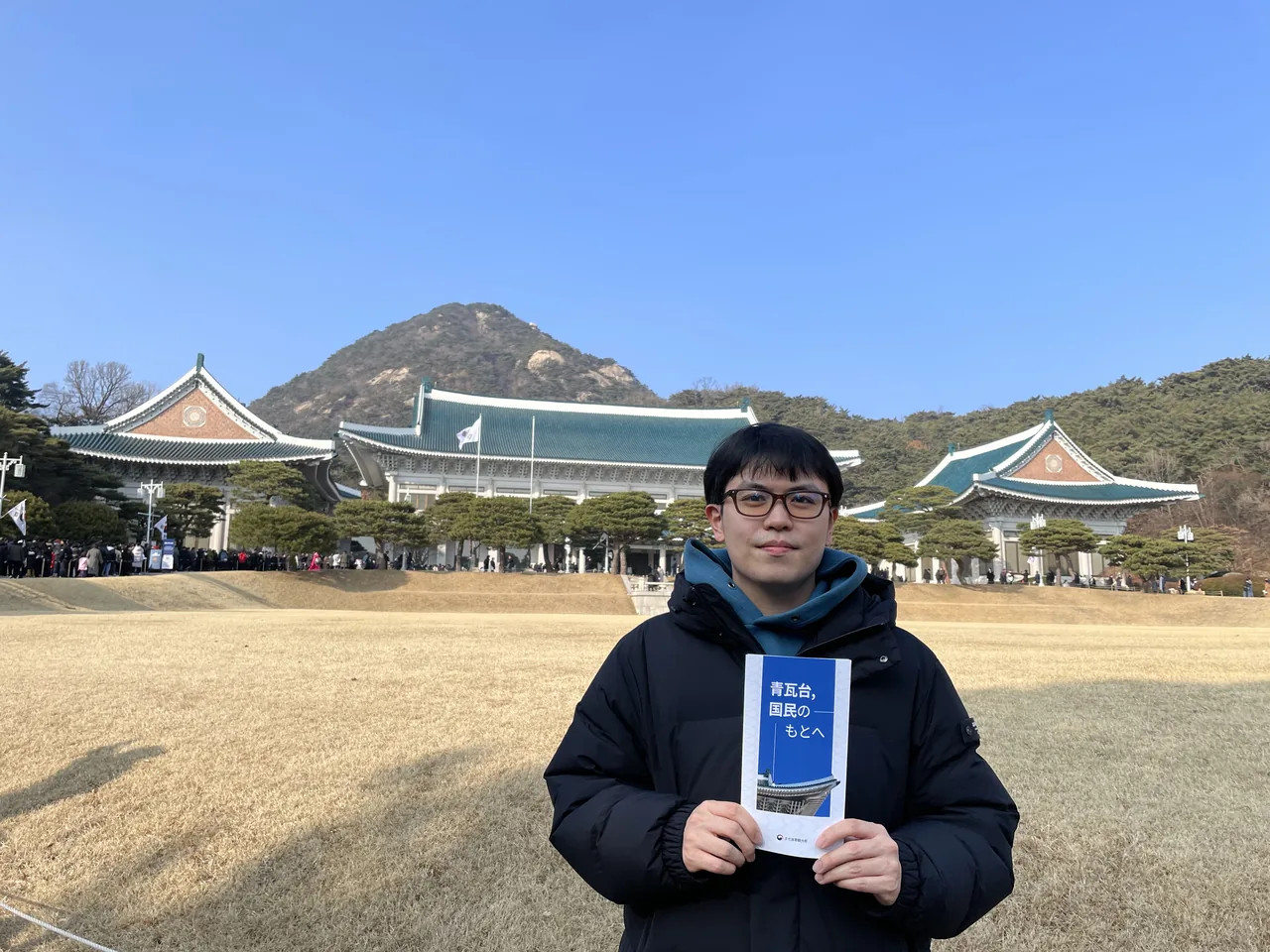
By living locally and interacting with the people of a country, you not only deepen your understanding of that country but can also feel it firsthand. What I first felt in South Korea was how easy it was to live there. Seoul is extremely developed — if you saw a photo with the writing hidden, you might think it was Tokyo; that is how similar the two cities are. I was able to live freely, without ever feeling that I was a foreigner.
I was also surprised by how many people understood Japanese. In South Korea, students apparently study Japanese or Chinese as a second foreign language as early as junior high school. Perhaps because of this, I met any number of SNU students who could speak Japanese. Some were formidable enough to read classics such as The Tale of Genji in the original, to the point that I, as a Japanese person, felt rather ashamed. It is obvious that fewer UTokyo students understand Korean than SNU students can speak Japanese. I was struck by how Western-centric Japanese students still are, even today.
However, this does not, of course, mean that everyone views Japan favorably. I felt that young people who study Japanese to any extent are fond of Japanese pop culture, while treating political issues as a separate matter. The question of how to view Japan — the stance toward Japan — is in itself one major element forming the axis of confrontation between conservatives and progressives in South Korean politics. Now that Japan’s presence in South Korean society has declined, it is not as important an element as it once was — gender issues, for example, have instead become a major point of contention between conservatives and progressives — but the question of attitudes toward Japan still retains a certain influence.
During my stay in South Korea, I had the opportunity to hear from commentators on both the conservative and progressive sides, and because the “Japan” each side spoke of was diametrically opposed, I found myself nodding: no wonder they cannot find common ground with each other. On the conservative side, a former SNU professor with connections to Japanese political circles said that this is an era in which Japan-Korea security cooperation is absolutely necessary, and that Japan’s 2015 security legislation is there to protect South Korea. Therefore, on the comfort women issue, the Korean government should simply pay compensation to the former comfort women, he said.
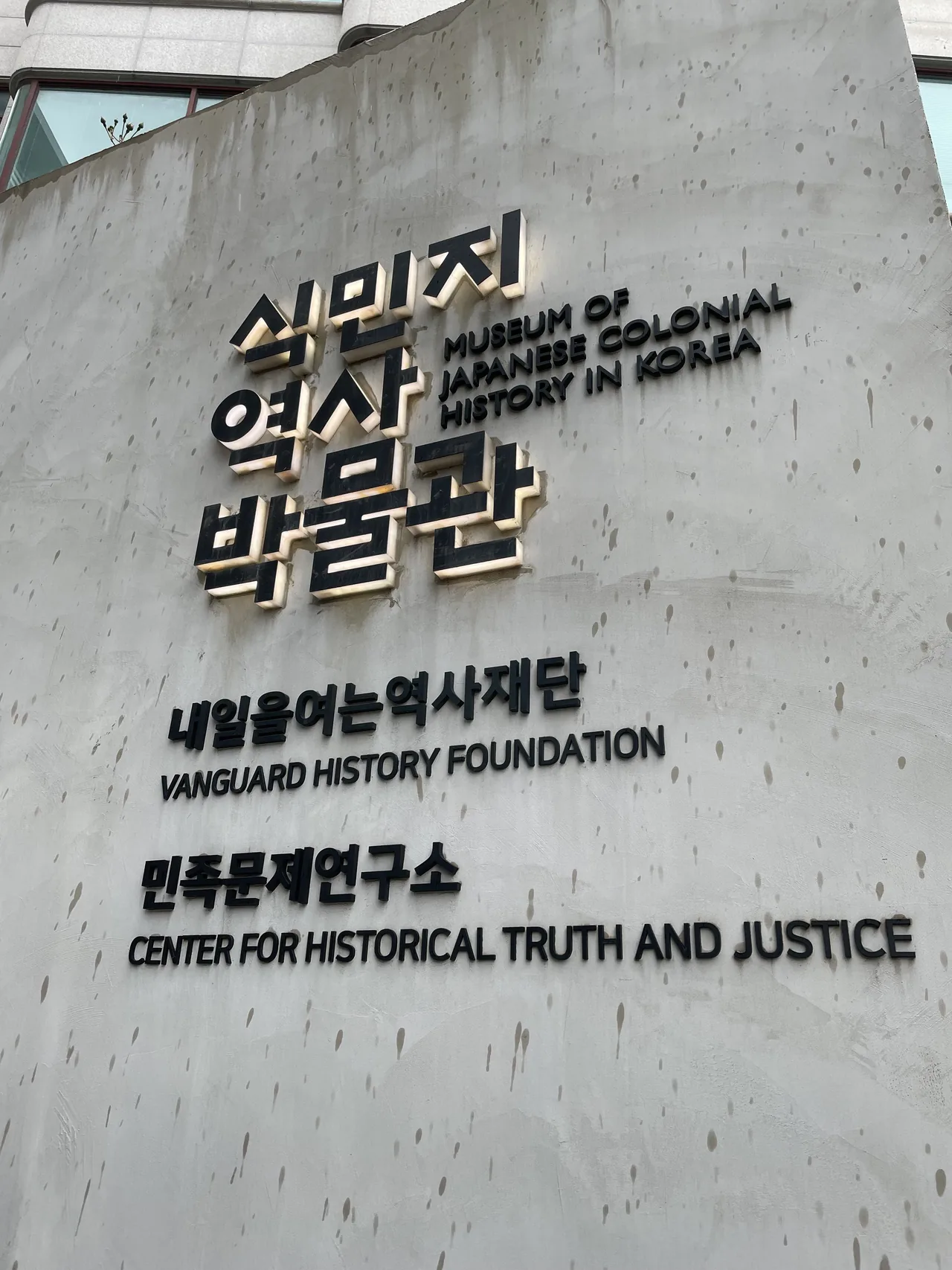
Conversely, on the progressive side, from a person at the Museum of Japanese Colonial History in Korea in Seoul’s Yongsan district — someone who had also taken part in supporting former wartime laborers’ lawsuits seeking compensation from Japanese companies — I heard that the 1965 Treaty on Basic Relations between Japan and the Republic of Korea, the 2015 comfort women agreement, and the 2023 Japan-U.S.-ROK Camp David agreement have all merely put a lid on the historical issues, and that the Japanese government’s settling of the past would also contribute to Japan’s path as a peace-loving nation. Having actually seen and heard both of these utterly different views, I cautioned myself that I could never presume to understand South Korea by looking at only one side.
Insights into China
In China, where I headed after South Korea, I was overwhelmed by the grand scale of everything. To begin with, the roads in Beijing are wide. I remember that soon after arriving in Beijing, watching countless cars stream incessantly along broad roads with many lanes, I felt it was a scale of magnitude comparable to the United States. Naturally, it is not only the roads that are big: the many heritage sites in the city, for example, are all magnificent ones boasting long histories, and merely seeing them stirred my interest in Chinese history.
Because the differences from Japan were greater in China than in South Korea, I have much to tell relative to the shortness of my stay. I cannot explain everything here, but, for example, I glimpsed one facet of China’s view of history and felt the strength of its nationalism.
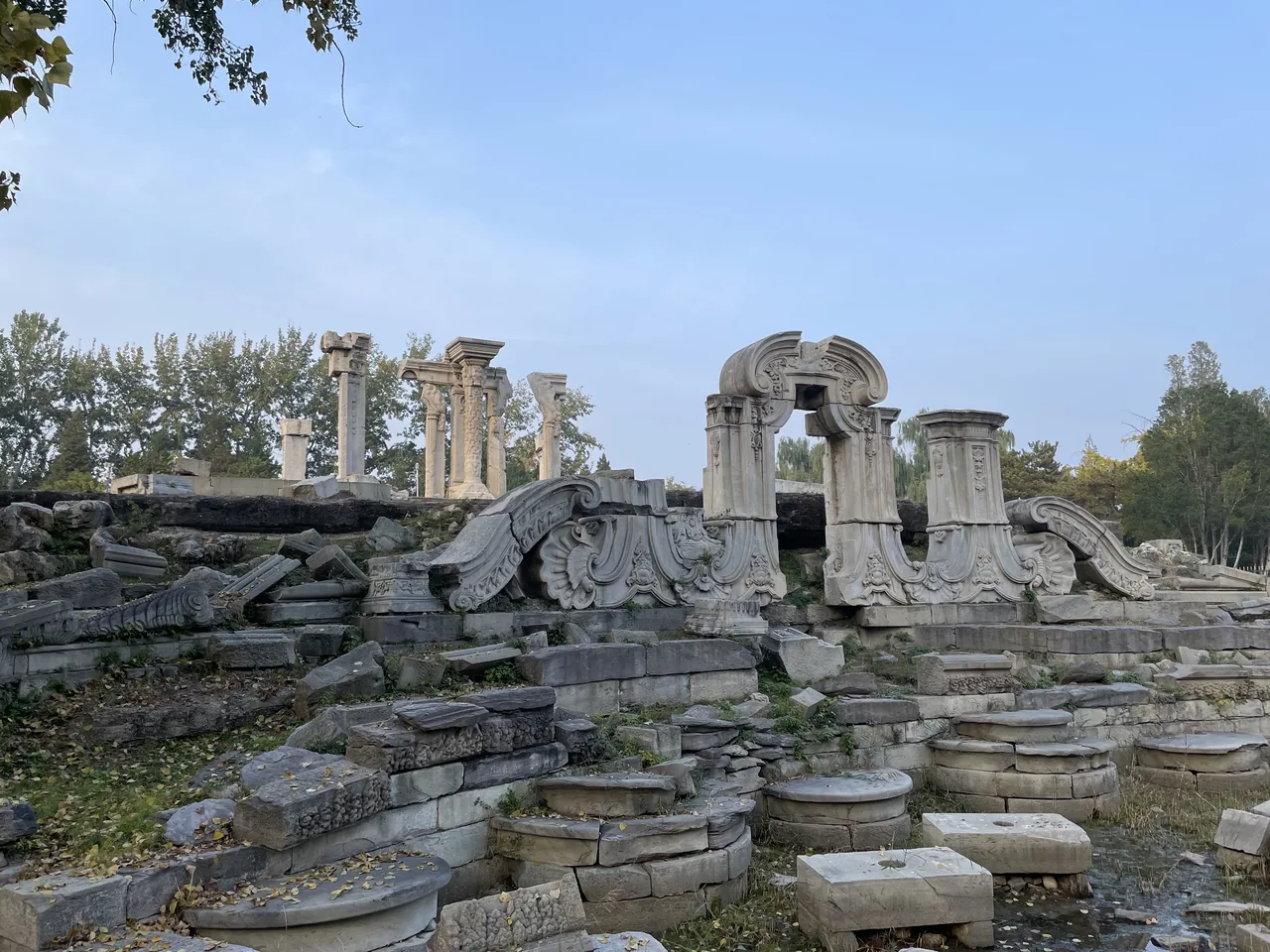
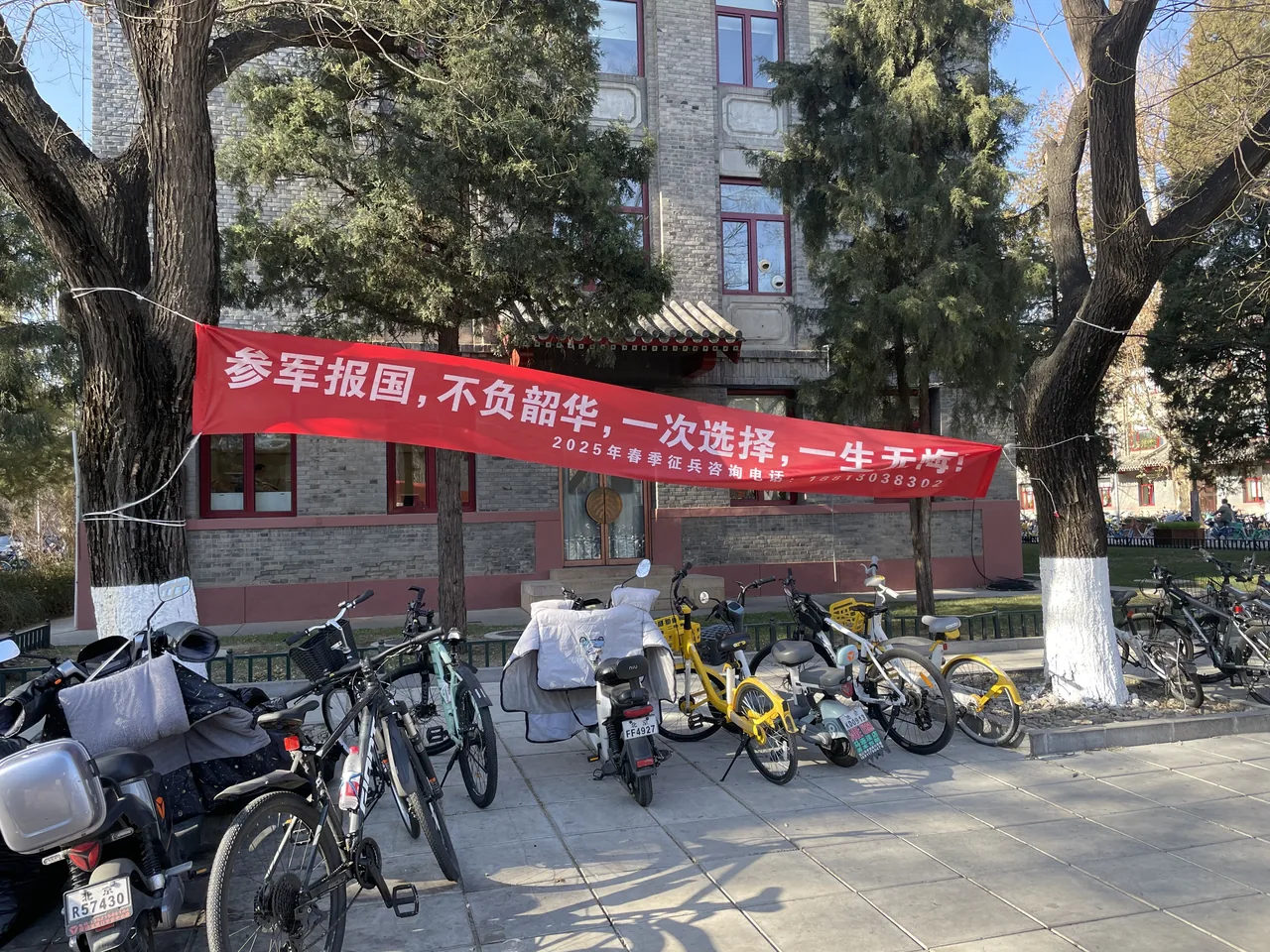
Right behind Peking University lie the remains of a garden called Yuanmingyuan — the very Yuanmingyuan that appears in textbooks, destroyed by the Anglo-French allied forces during the Second Opium War (Arrow War). At sites with that kind of history, you usually find explanations to the effect that “the China of old was weak and therefore lost; that is why we must become strong.” I found it striking that the logic of power itself was not rejected. Leaving Yuanmingyuan and returning to the university, the signboards on campus frequently feature phrases like “love the country” and “serve the country.” No small number of the motorbikes and taxis running through the streets are decorated with the Chinese national flag and the Communist Party flag. You also often see young people and children wearing long coats with CHINA written on the back, as if they were athletes on a national sports team.
The way words like loving the country and repaying the country are used so matter-of-factly, and the way many people are strongly conscious of the state within daily life — in their vehicles and their clothes — differed considerably from Japan, and my surprise was great. Personally, I find it preferable when the state does not come to the forefront of daily life, as in Japan — it feels less imposing.
As the flip side of this strong “patriotism,” I also had the experience of being exposed to curious stares precisely because I was Japanese. Once, when traveling in Northeast China, two Japanese friends and I were sightseeing at a museum on the Manchurian Incident in Shenyang and the former imperial palace of Manchukuo in Changchun (the palace where Puyi lived as Emperor of Manchukuo). There, when we spoke in Japanese (in hushed voices, naturally), the Chinese people around us reacted. There were children who said to their parents, “They’re Japanese!” and adults who openly stared at us. I do not truly know what they were thinking, but they were probably not looking at us with friendly eyes. I could not help wondering what kind of people Japanese are being taught to be in their eyes.
So not everything was a pleasant memory, but taking it all together, I can say with confidence that my study abroad life in China was a wonderful experience.
Improving My English and Learning Korean
Through studying abroad, my foreign language abilities also improved. I was not good at English — my TOEFL score when I entered graduate school was 76 — but as a result of somehow surviving SNU’s 180-minute classes and the enormous volume of assigned readings (around 500 pages of English academic papers every week; impossible to finish), my score rose to 100. Of course, a high TOEFL score does not immediately mean one is good at English, but I feel I have definitely improved compared to before.
I also studied Korean during my study abroad. Korean universities have language schools called eohakdang, and DD students could take their classes for free. As a result of attending this language school in parallel with graduate school, in one year I improved enough to obtain the highest level of TOPIK (Test of Proficiency in Korean). As is well known, Korean is a language that closely resembles Japanese. It was my first time learning a language other than a Western one, and I was struck by how smooth and enjoyable it is to learn a closely related foreign language. Moreover, because Korean, like Japanese, has been strongly influenced by the culture of Chinese characters, learning Korean also deepened my understanding of Japanese.
Everyone — especially those of you who have only ever studied Western languages — please do try studying Korean. It will change your outlook on foreign language learning, without a doubt.
The CAP Community
This is a strength of CAP rather than of study abroad as such: its vertical and horizontal connections are rich. Gatherings are held regularly, bringing together not only senior participants of the same UTokyo–SNU–Peking–NUS CAP as mine, but also people who took part in the CAP programs offered by other universities (Waseda, Kobe, Nagoya, and others), so you can build connections. This alumni community is a precious asset that serves you not only in job hunting but also after you start working.
Two Challenges: English and Job Hunting
Let me touch on English ability and job hunting — likely the main factors that make Japanese students hesitate to study abroad — drawing on my own experience. As for the former, as mentioned above, I am by no means good at English, yet even so I grew to a fair extent through my life abroad. Even if you are not doing well now, there is no need to give up. Of course, it is true that the better your English is before studying abroad, the more fulfilling your time abroad will be. Even so, my English improved somewhat through the struggle, so I am glad I took on the challenge.
Next, job hunting. I believe it is common either to finish it before studying abroad or to put it off until after returning, but balancing study abroad and job hunting is not impossible. Giving up on study abroad solely because of job hunting would be a waste. My first choice was to become a national civil servant, so I passed the civil service examination before going abroad, and my schedule became one of doing private-sector job hunting and ministry visits while studying abroad. Specifically, in my second semester in South Korea (spring 2024), I took only courses reputed to have light workloads, and devoted a considerable amount of time to online interviews with private companies and preparation for them, as well as preparation for ministry visits.
So job hunting while studying abroad is also an option. That said, everyone naturally wants to spend more time on things that can only be done locally, so it is a difficult balance. Those aiming to become national civil servants in particular need to plan their schedules well, since the timing of the civil service examination is fixed. Even so, there is no need to give up study abroad itself for the sake of job hunting.
Conclusion
I have spoken at length here about CAP’s appeal and my own study abroad experiences, but I do not think this study abroad was a flawless, perfect 100-out-of-100 experience. To put it bluntly, my year and a half of study abroad was a halfway affair. At both SNU and Peking University, there were Japanese friends and seniors who studied the local language at a high level and threw themselves in among the local students, fighting it out alone. Compared with them, I am aware that I was, in the end, a halfway presence — taking classes in English, interacting only with university students who could speak English, having touched merely the surface of Korean and Chinese society. In that sense, studying abroad in non-English-speaking countries in English through CAP certainly has its limits.
But even so, I believe this study abroad had meaning. Precisely because I lived there, my interest in South Korea and China grew, and I came to resolve to keep following news about them from now on. Though not many, I made local friends I can still contact today. By living overseas, I also came to recognize Japan’s strengths and weaknesses. I wrote at the outset that all I had was the naive prospect that studying abroad might change my life — and while it did not change my life dramatically, I was able to gain experiences hard to obtain anywhere else. That is why I want to say it loud and clear: even if you cannot speak the local language, even if you are not good at English in the first place, and even if, on top of that, you are worried about job hunting, study abroad is still worth trying.
I will continue to face the halfway-ness of myself that I came to feel so keenly through this study abroad. And precisely because I am that kind of person, I hope that those of you considering study abroad will indeed take on the challenge. I would be glad if this essay becomes the occasion for that — and if it happens through the CAMPUS Asia Program, there is nothing more I could ask.