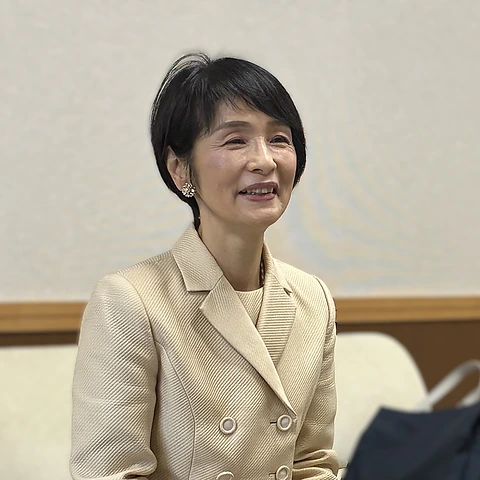

I joined the Financial Services Agency (FSA) in 2004, and have since gained experience in the supervision and inspection of financial institutions as well as in the planning and drafting of financial systems. The laws whose amendment I was involved in include, for example, the Banking Act, the legislation that changed the term “virtual currency” to “crypto-assets,” and, more recently, legislation concerning the review of regulations on funds transfer services.
The course “Capital Markets and Public Policy,” which I will be teaching from October 2023, is part of the endowed lecture series funded by Mizuho Securities. Officials connected to the FSA have been involved in it in the past, but this is not an experience everyone can have, so I feel truly honored to have been given this opportunity. “Capital Markets and Public Policy” deals with real policy issues, and this academic year’s course will focus on the theme of “from savings to investment.”
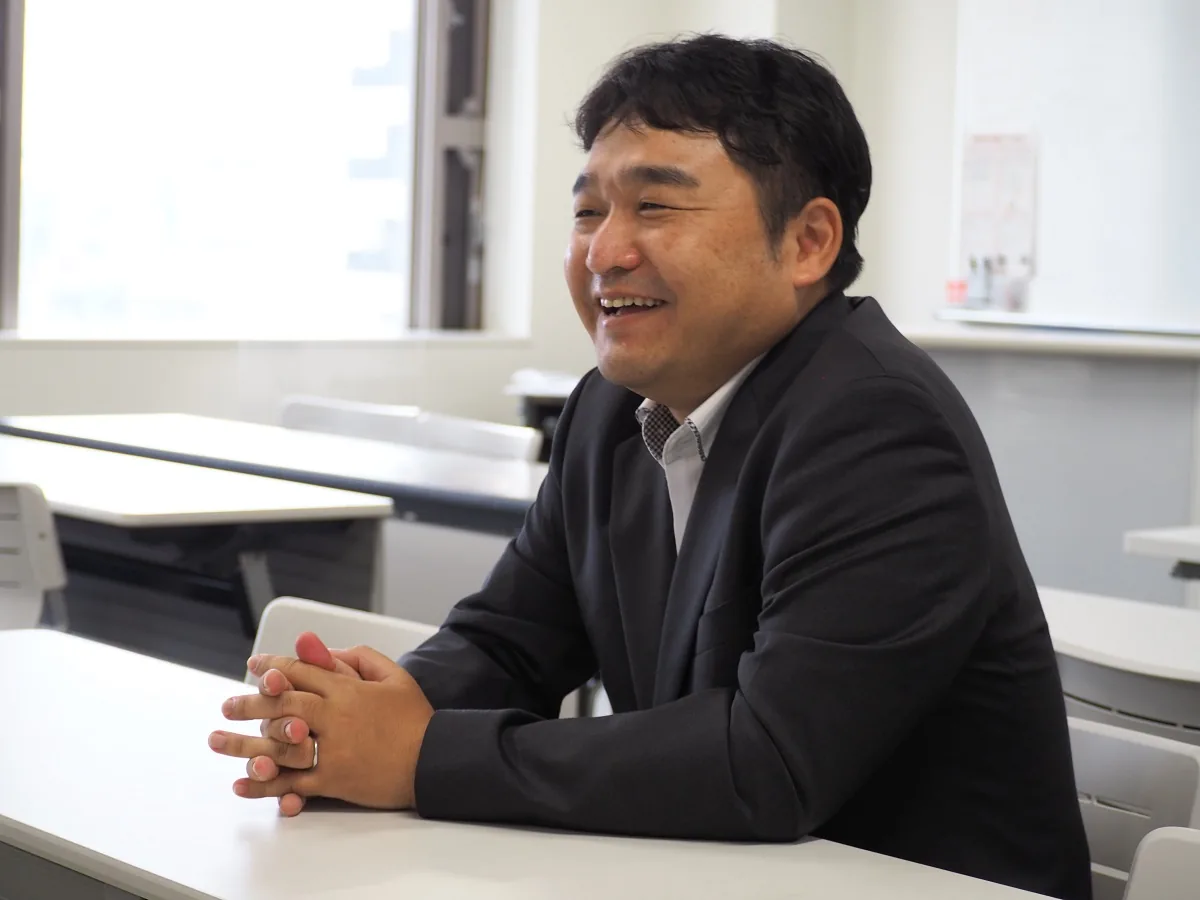
It is often said that encouraging investment requires improving financial literacy through education. Raising literacy is of course important, but in reality, that alone does not necessarily lead to more investment. Whether it leads to investment also depends on various other factors, such as whether the sellers of financial products take the customer’s perspective and whether the market is attractive. In the course, so that students can think about the issues from as many perspectives as possible, I am planning to invite people from a variety of positions in both the public and private sectors as guest lecturers, and to have them give lectures in relay format on their respective initiatives and the challenges they perceive.
I will also be teaching another course called “Financial and Capital Markets.” In this course, I will have students conduct case studies on themes related to finance. For example, a little while ago there was news that the “◯◯pay” services that have become so commonly used recently would also become usable for salary payments. The aim is to have students put themselves in the position of the people in charge and think deeply about questions such as “Why was such a system created?” and “What challenges are there to realizing it?” Even with services we use casually every day, I think new insights can be gained by taking the perspective of those who design them. For these case studies, I plan to propose several candidate themes, but if students have other themes they are interested in, they are welcome to work on those instead. By tackling a theme they strongly want to research, I hope they will get a hands-on feel for policy.

Not limited to the financial field, I believe that for any policy issue there is no absolute right answer that scores a perfect 100 in everyone’s eyes. I have faced many issues so far, and every policy has good aspects as well as aspects that draw criticism. Even so, on the policy front lines, what is ultimately required is to reach a single conclusion and carry it out in order to move in a better direction than the present. Amid all this, I hope that students will acquire a “sense of balance” and “flexibility” through my courses. Gathering diverse opinions and information in a balanced way, flexibly improving one’s own thinking along the way, and finally reaching one’s own conclusion — I believe such skills are useful not only in public policy but in any kind of work.
I will be teaching as a lecturer, but my way of thinking is not the only correct one; if anything, there may be respects in which my own perspective has been narrowed by my past experience. I am very much looking forward to gaining new insights from the students through these classes.
[Biography] Joined the Financial Services Agency in 2004. After serving in the Coordination Division, Inspection Bureau; the Actuarial Affairs Office, Corporate Pension and National Pension Funds Division, Pension Bureau, Ministry of Health, Labour and Welfare; the Credit System Office, Planning Division, Planning and Coordination Bureau; the First Financial Supervision Division, Treasury Department, Kanto Local Finance Bureau; the Cooperative Financial Institutions Office, Coordination Division, Supervision Bureau; the Management Office and Policy Division, Coordination Division, Planning and Coordination Bureau; the Budget Bureau, Ministry of Finance (Health and Labour Unit; Economy, Trade and Industry Unit); and the Financial Markets Division, Policy and Markets Bureau, in 2019 became Director of the Cross-sectoral Legal Framework Office, Coordination Division, Policy and Markets Bureau, FSA. In 2020, Director of the Payment and Financial Service Intermediaries Legal Framework Office, Coordination Division, Policy and Markets Bureau, FSA. In 2021, Principal Coordinator, Coordination Division, Strategy Development and Management Bureau, FSA. In 2022, Principal Planning Officer, Coordination Division, Strategy Development and Management Bureau, FSA, concurrently Director of the Public Relations Office. In 2023, Project Professor at the Graduate School of Public Policy (GraSPP), the University of Tokyo. Courses taught: “Capital Markets and Public Policy” and “Financial and Capital Markets”