
Biography
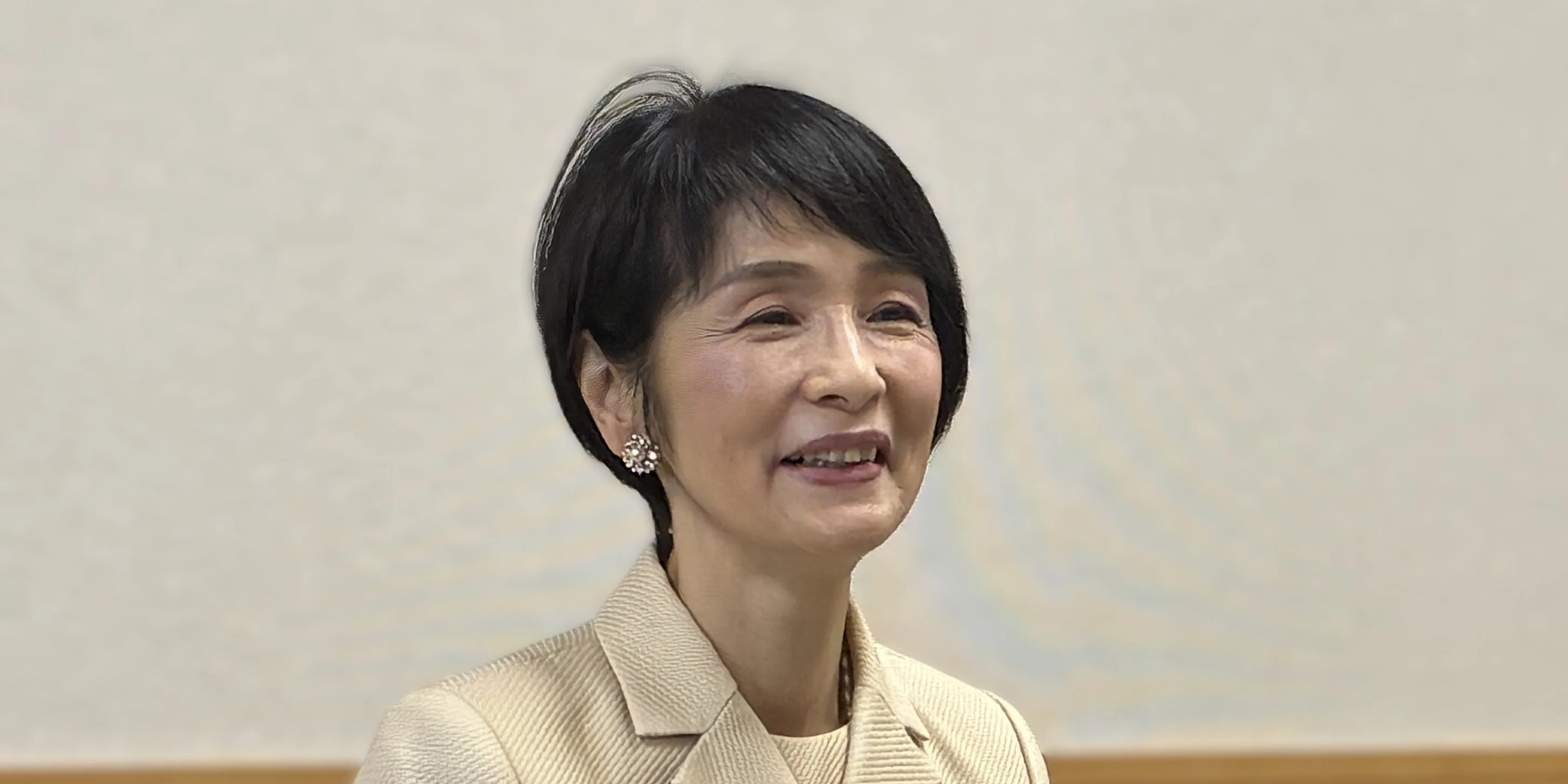
Visiting Professor, Graduate School of Public Policy, The University of Tokyo / Outside Director, IHI Corporation / Outside Director, Japan Exchange Group After graduating from the Department of Psychology, Faculty of Humanities, Sophia University in 1982, she joined Nippon Kogaku Kogyo (now Nikon). She left the company upon marriage and worked at an unagi (eel) restaurant from 1986. After joining the Sasakawa Peace Foundation in 1989, she encountered the methodology for evaluating the programs of nonprofit organizations developed by the world-renowned management thinker Peter Drucker and began her research. In 1994, she earned a master’s degree from Keio University’s Graduate School of Media and Governance (as a member of its first cohort). From 2001, she served as Counselor in the evaluation office of the Japan Bank for International Cooperation (JBIC). She received a Ph.D. in International Public Policy from Osaka University in 2002, and became a Visiting Associate Professor in the Graduate School of Engineering, The University of Tokyo, in 2003. In 2006 she became Associate Professor, and later Professor, at the National Institution for Academic Degrees and Quality Enhancement of Higher Education. From 2012 she founded and ran the Excellent NPO Award jointly with the Mainichi Shimbun, and from 2019 she served as an Audit Commissioner of the Board of Audit of Japan. From 2024 to March 2025, she was President of the Board of Audit.
The Board of Audit of Japan is an independent state organ that belongs to neither the Diet, the Cabinet, nor the courts, and has preserved its customs and traditions for roughly 150 years since its founding in 1880 (Meiji 13). The person who boldly took a scalpel to its closely guarded ways of working was Yayoi Tanaka, the former President of the Board of Audit. Her career began in 1982 when, after graduating from Sophia University, she joined a traditional large corporation in the main career track. A personnel transfer she received after marrying prompted her to leave the big company, but with curiosity and conviction she built a record of achievement through repeated challenges, failures, and successes, making a one-of-a-kind career her own. While working at a nonprofit organization, she fell for the world-renowned management thinker Peter Drucker and went to the United States "head-on." She lived with her husband near the Drucker residence and threw herself into mastering what was then the most advanced methodology for evaluating nonprofit organizations. We asked Tanaka about her journey of single-handedly cultivating the advanced specialty of "evaluating public programs"—then unknown in Japan—and putting it into practice.
――After becoming the second woman to assume the post of President of the Board of Audit in January 2024, you set out five goals, including a “citizens’ perspective,” and devoted yourself to reforming the operations of an organization that retains traditions dating back to the Meiji era. Your résumé shows that after Nippon Kogaku Kogyo (now Nikon) came work at an unagi restaurant.
Yayoi Tanaka (hereafter, Tanaka): I joined Nikon in the main career track, but female employees were required to wear uniforms and took turns on tea duty. We came to the office before the male employees arrived; from 9 a.m. it was serving tea to 50 people, collecting the cups, serving lunch, collecting again, snacks and coffee at 3 o’clock, and tidying up at 5 p.m. You memorized everything—who took sugar and milk, who drank two cups of coffee. The daily routine even included collecting cigarette butts.
――So even career-track employees were assigned tea duty.
Tanaka: 1982 was before the Equal Employment Opportunity Act came into being. I expected to be able to do the same work as the men, but as two and then three years passed, I noticed that, before I knew it, my male peers were being entrusted with work carrying greater responsibility. When I got married, my boss told me at the wedding, “You should have a child soon and quit.” Shortly after I returned from my honeymoon, I was transferred from the overseas publicity department to the president’s office. Meeting after meeting—nothing but serving tea, really. Wanting work with more responsibility, I took the plunge and resigned.
The Powers of Observation I Honed at an Unagi Restaurant
It was not as though I had another job lined up. My husband’s family at the time ran an unagi restaurant, so after resigning I worked there for a while. At first, I assumed I would surely be able to contribute in all sorts of ways using what I had learned at university. But in the dining room, all I could do was stand around blankly even when customers came in. At the storefront, I was so clumsy at sliding the skewers in and out of the grilled eel fillets that I ruined more than 20 of them. Everyone around me worked briskly while I did nothing but fail. I was reassigned to behind-the-scenes work, but I could not handle the bookkeeping and was of no use there either.
One day my father-in-law, the company president, handed me a vacuum-packed grilled eel he had bought at a supermarket and told me to keep watching it to see when it would go bad. The best-before date came and went with no problem at all. Then my father-in-law told me to call the maker of the vacuum-packed eel and ask why it was still fine. When I asked as instructed, the person at the manufacturer kindly explained, “We set the best-before date somewhat conservatively.” At that, my father-in-law said, “Then keep watching it a while longer.” I kept watching, and about five days later it puffed up with a whoosh. I see, I thought—I felt I had glimpsed the posture of a company that handles food, and above all, I truly felt the importance of confirming things with my own eyes.
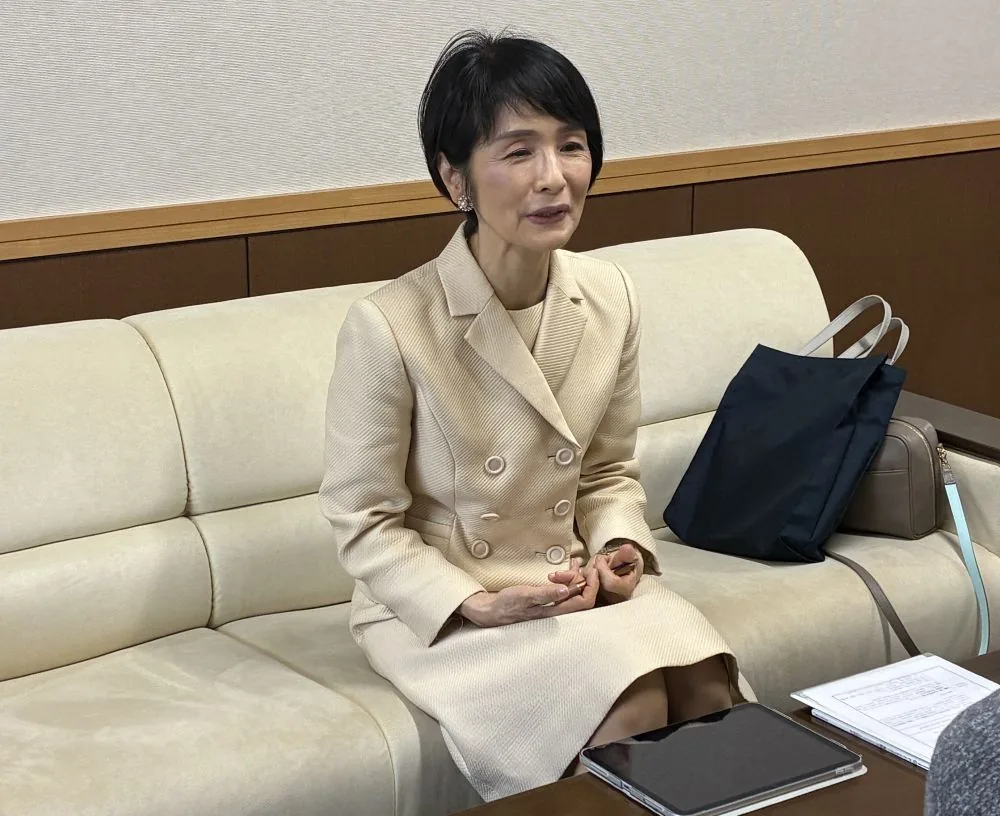
From then on, I feel I had hammered into me a field-first principle: that you must observe and confirm everything for yourself. There are so many things you cannot understand by thinking alone. Before long I joined the Sasakawa Peace Foundation, and ever since, confirming everything for myself has remained my creed.
Why Do Outcomes Differ?
――What kind of work were you in charge of at the Sasakawa Peace Foundation?
Tanaka: I was in charge of grants to non-governmental organizations (NGOs) in the Philippines, Southeast Asia, East Asia, Central Europe, and Southern Africa. As I responded to proposals from various quarters over about eight years, I noticed that similar proposals were producing large differences in performance. What was more, I could not put that difference into words. I agonized over how to evaluate them. It was then that I came across The New Realities: In Government and Politics, in Economics and Business, in Society and World View (Japanese edition, Diamond Inc., 1989), written by the world-renowned management thinker Peter Drucker, and it came as a shock.
Going Head-On at Peter Drucker
Drucker wrote that nonprofit organizations (NPOs) “give (people) a place to play a meaningful role as citizens,” and he sketched a sweeping vision of the future after the East-West Cold War in which NGOs, NPOs, and volunteers would flourish. Powerfully drawn in by his sense of history and his worldview, I resolved, “I am absolutely going to meet this man.” I promptly headed to a symposium held in Dallas, in the United States, where Drucker was to appear. I went to the venue early in the morning, and there was Drucker, sitting in a large chair on the stage. I had him sign my book and invited him to please come to Japan. At that time, however, he turned me down, saying, “I’m too old now for long journeys.”
Later, working together with Diamond Inc., which has published many of Drucker’s books, I was able to invite him to Japan in 1993. From then on, Drucker and I developed a relationship in which we corresponded by fax about research and practical work.
As my interest deepened, I entered the master’s program at Keio University’s Graduate School of Media and Governance in 1994 and began my research on the nonprofit sector. When I consulted Drucker, he said, “Why not study in the United States?” So I earned all the credits required for completion in my first year, and in my second year my husband and I moved to the U.S., renting a house next to the Drucker residence in California. For one semester, I studied at the graduate school of management at Claremont (the Drucker School). And during my stay in Claremont, I translated Peter F. Drucker’s Self-Assessment Tool for nonprofit organizations (Japanese edition, Diamond Inc.). Studying in graduate school while translating at Drucker’s side—this experience became a great weapon throughout my later career.
――After a corporation, a foundation, a government-affiliated financial institution, and a university professorship, in 2019 you made the move to Audit Commissioner, evaluating government agencies.
Tanaka: I received a sudden phone call from the Prime Minister’s Office sounding me out about taking the post of Audit Commissioner. And I was told to decide within two weeks. It was very difficult, as I would have to resign from every position I held—my university work, outside directorships, the Excellent NPO Award (which I had launched myself and co-hosted with a newspaper company), my own private practice, and so on.
”What Exactly Do You People Do?”
――You became President of the Board of Audit in 2024. The first thing you tackled was public relations reform.
Tanaka: The trigger was a meeting of a business association I attended in 2019. The former chairman of a venerable major financial institution asked me, “We are currently discussing creating an independent audit and oversight body for public finances. But now we hear there is a Board of Audit. Yet no information about it ever reaches us. What exactly do you people do?” When I looked at the materials the former chairman had brought, the Board of Audit was written as the “Audit and Inspection Committee,” as if it were one of the government’s advisory committees. The Board of Audit has a history and tradition dating back to the Meiji era, and its members take office through an attestation ceremony before the Emperor—it is an independent supervisory organ of public finance. I was shocked, and I felt strongly that we had to make ourselves better known.
”A Salamander That Survived”
One former Board official said things like, “Well, we are, so to speak, a salamander that survived the fires of war—from the Meiji era through the First World War and the Second World War. It can’t be helped.” Among the Board’s staff, too, the mood was: why do we even need public relations? However often I argued that we needed to explain ourselves to the public, it was not taken on board.
I consulted various top figures in the business world, and among them, the story I heard before taking office from Mutsutake Otsuka of JR East, one of the so-called Three Musketeers of the breakup and privatization of the Japanese National Railways, was especially instructive. Otsuka had selected 20 promising employees with real potential and created opportunities for them to talk with top management. They then offered up a great many opinions. Those 20 people, he said, later became the standard-bearers of the reforms that moved an organization of 400,000 people.
If that was so, I thought, then by gathering 10 people I might be able to create standard-bearers for reform of the Board of Audit. I went back to the Board and picked out people who seemed likely to become standard-bearers. In no time, 14 names came to mind, and I called each of them to my office, one by one, to talk. However, I would have to leave office in one year, so there was no time. So I thought about what I could share with them and leave behind.
Bringing the Wisdom of Organizational Management to the Board of Audit
I believed in Drucker’s teaching that “in the management of organizations, there is no difference between for-profit and nonprofit,” and even after becoming a Commissioner, I often received advice from people with experience in corporate management. I decided to share that process with the standard-bearers. So I launched a private study group, the “Group to Consider the Future of the Board of Audit,” creating a forum where eight people with management experience and other experts, together with 14 Board staff members, discussed the Board of Audit’s governance, management, public relations reform, audit reporting, and more. At first, the staff were frozen stiff with tension in front of these prominent business figures, but with one word from a certain executive—“Stop thinking from the limitations”—they began to speak with a liveliness that made them almost unrecognizable.
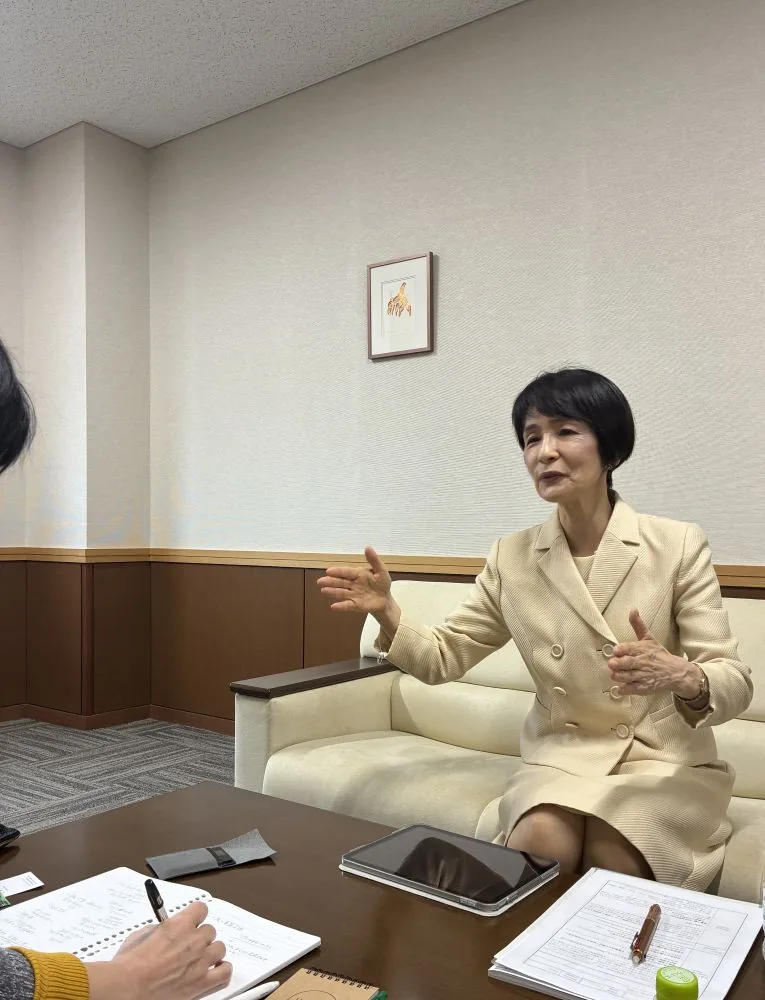
Also on the advice of those with management experience, upon becoming President I set a goal of speaking with staff one on one. There were about 1,250 employees, but I made participation voluntary—by raised hands—rather than compulsory. Thinking that younger staff would find it hard to speak if grouped by division with their superiors present, I grouped the sessions by age instead. In the end, I spoke with around 300 people. From that, I realized that the staff needed networks outside the organization.
At the same time, to raise the Board of Audit’s visibility in the media, I started by giving numerous media interviews myself as President. Major newspapers, magazines, television, radio, even a newspaper for elementary school children—I spoke wherever I possibly could. It was all a first. The public relations office must have been bewildered. The PR director would sit in at the back, and whenever a question got delicate, he would abruptly stand up—a signal to keep my remarks restrained. That is how cautious a start it was.
――When did the mood toward public relations change?
Tanaka: I had been laying the groundwork even before becoming President. A turning point came in 2022, during the COVID-19 pandemic. A staff member in his thirties who had returned from a posting in the United States had learned the importance of public relations from the activities of the Ministry of Foreign Affairs, and he raised the problem of the Board of Audit’s low public profile. So we launched an online study group with media professionals. We invited Dentsu America (whose then Japanese president took part), Nippon TV and the Nikkei in Japan, and Hearst Fujingaho, which had been pursuing advanced digital transformation (DX), and began the study group with eight participants including Board staff. Many of the media people were from the city-news side, and they fired off one harsh question after another: “We can’t tell what you’re trying to say.” “The audit reports have no message.” “Do you even intend to communicate?” It felt like being at a wake.
Here were staff who normally dealt only with the top tier of government officials, suddenly facing harsh questions from private-sector people they had just met. Sensing a real danger that the study group would not survive, I called the staff in one by one and desperately followed up, telling them, “If there’s anything you want to say, tell me anything at all.” We managed to keep the activity going, and six months later, the media participants were even calling us “an organization sincere about how public funds are used” and “the conscience of Japan.”
The staff’s self-esteem recovered as well. We compiled a report, and an official “Public Relations Strategy Study Group” came into being. Senior officials began holding regular discussions with media editorial writers and reporters, while a design team centered on younger staff changed how materials were prepared and improved the website so that data would be easier to look up. Press coverage then increased dramatically.
A Sweeping Reform of a Practice That Lasted 80 Years After the War
That said, there was a fundamental barrier to having the media properly take up the Board of Audit’s activities and communicate them to society: the practice, maintained for roughly 80 years since the war, of releasing all audit reports simultaneously in the first week of November. The audit survey schedules and processes had all been set with that timing as the target. The schedule needed to be drastically changed and the releases staggered. This was because we had heard from much of the media that “if everything is released in bulk at once, we cannot turn it into timely articles.”
Since we were changing a practice in place since the Meiji era, the internal turmoil was enormous. It meant moving schedules not only for ourselves but for the ministries and agencies on the receiving end as well. Some people even told me, “If you have time to think about that, you’d be better off thinking about your post-retirement job” (laughs).
Around that time, I had an opportunity to be interviewed by the Yomiuri Shimbun, and I said things like, “We will move ahead with leveling out the Board of Audit’s audit schedules and the timing of audit reports.” A female lawmaker from the ruling party who read the article then asked me about it in the Diet. When I answered, “We will implement it where we can,” the lawmaker said, “Prime Minister, the President says she will do it,” prompting then Prime Minister Fumio Kishida to urge the ministries and agencies to cooperate.
Being reported in the major media became the occasion for drawing many people’s attention; it primed the Diet member’s question, and it entered the official record. The outer moat had been filled in, and I was able to build a foothold for reform. I felt keenly that to push forward organizational reform of a public institution, understanding and cooperation from the media are critically important.
――In 2026 you will be teaching “Public Finance Evaluation and Improvement”—a syllabus generously packed with the major elements of the social sciences, including economics, law, management, and political science.
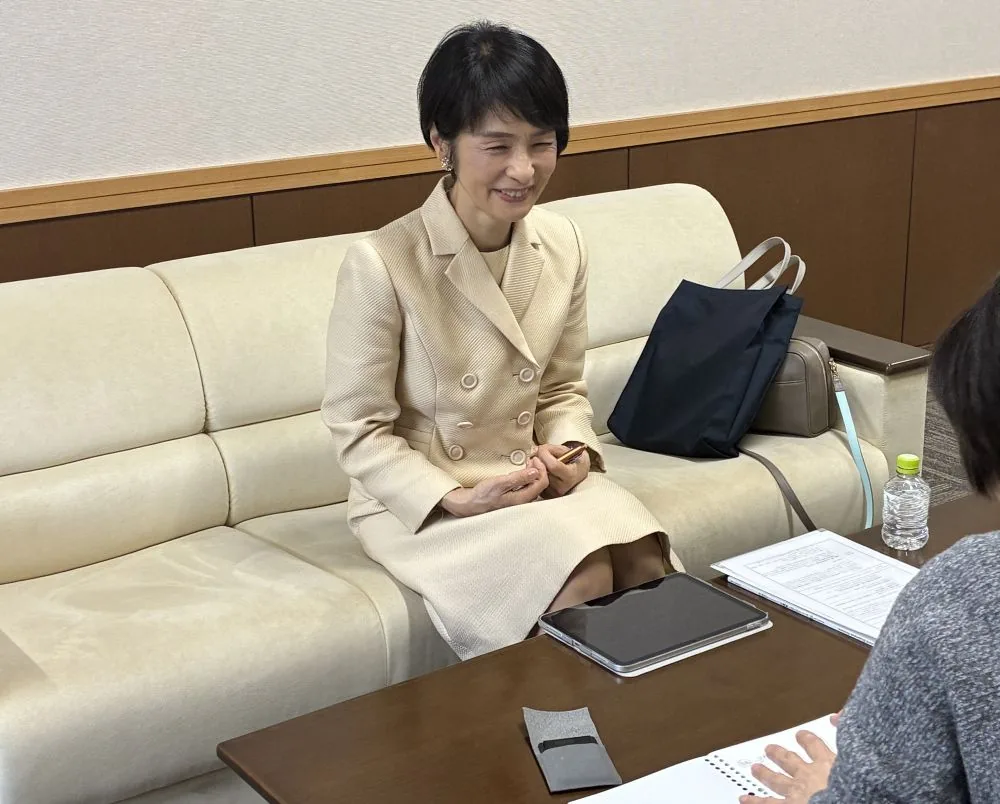
Tanaka: I wanted a course on public finance that, after covering the basic theory, goes full circle through the structure and process of budget formulation, and then on to budget execution, evaluation, and audit. It is precisely the PDCA (plan, do, check, act) of public finance. Here, alongside theory and classroom learning, I have also set up workshops where students can experience a simulation of the actual practice of government auditing. My career began with support for NGOs and developed, through an accumulation of connections, into the evaluation of social programs and policies, and then into serving as an Audit Commissioner of the Board of Audit. I currently also serve as a director of Japan Exchange Group (JPX) and of IHI. The constant thread is my lifework of “evaluating” how, concretely, society has been made better. Interestingly, evaluation theory for non-financial, nonprofit fields can be applied to NGOs and to government agencies alike. It could probably be applied to corporate social contribution as well. Beyond evaluating policies with a well-grounded yardstick, there is also a need to let society know the results that programs and activities have produced. Moreover, policy evaluation directed at the government sector is not only a means of improving administration; it is also an important tool for conveying the results of policies to the public, who are the taxpayers and the voters, and I believe it is, at its heart, a deeply intellectual endeavor that leads to making democratic society better. I intend to develop practical lectures that convey that real thrill.
Don’t Start Your Thinking from Systems and Precedents
――Do you have a message for students and working professionals?
Tanaka: What I want to tell the generations who will be active from here on is this: please do not start your thinking from limitations such as systems and precedents. This is also something I was taught by the top executives I consulted about the reforms. Unless you think in this order—what must be achieved, and then what needs to be done to achieve it—a project cannot come together. Also, having served as the head of an organization with great authority, I felt keenly that you must find people inside and outside the organization who understand and support you, and not get the order of things wrong as you move matters forward. You need to discern who truly holds influence within the organization and where the real information lies. This, too, is something I learned through countless painful failures.
(Interview and composition by Ayako Hirono, Specially Appointed Professor, Faculty of Policy Management, Keio University)