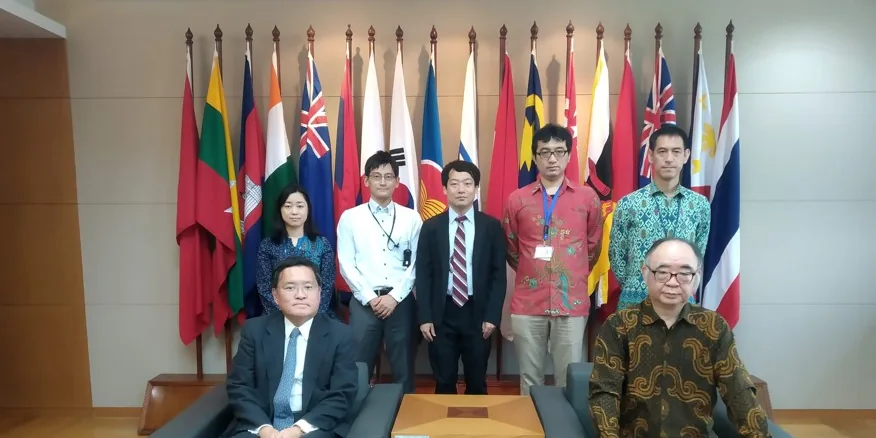

Ten years have passed since I completed GraSPP. I attended a reunion the year before last, and it was deeply moving to see that GraSPP has kept on steadily evolving since I took my job.
After graduating from the Faculty of Law, I wanted to study economics, so I applied to the Graduate School of Public Policy with the intention of switching from legal policy to the Economic Policy course. I remember my surprise at the entrance interview when Professor Teraya, who had taught me in my undergraduate seminar, turned out to be one of the examiners. By studying economics, I was able to acquire the grounding to look at society through lenses such as efficiency and the optimal allocation of resources. As an undergraduate I had been interested in questions of legal philosophy, but studying economics broadened the range of my thinking.
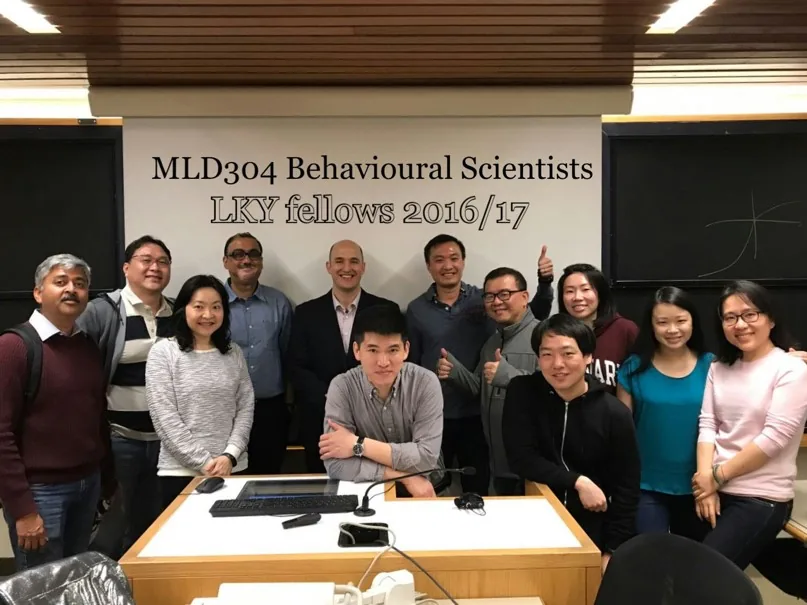
2017.5: A class at the Lee Kuan Yew School of Public Policy, National University of Singapore
When I entered, GraSPP was still only in its third year since its founding, but its faculty already included professors of the highest caliber in Japan—and after I started working, I would come to realize just how socially influential they were. The style of learning, with students taking the lead in discussions and presenting projects, was great fun. It was also stimulating that people with such diverse backgrounds had gathered there: international students from overseas, students who had come from working careers, and students from other faculties. At the time, I wanted work that would change society using both logic and creativity. Through my second round of job hunting, I once again faced myself and society in earnest. I visited both private companies and government ministries in my job search, and I chose the Ministry of Economy, Trade and Industry (METI) for the diversity and the appeal of its people. During my ministry visits, many officials spoke seriously, even to a student, about how Japan ought to be from the perspective of their own departments, and I was struck by their passion. I also identified with its culture of respecting new ideas and of asking how, from within government, the frameworks of society should be changed.
Since joining METI in 2008, I have been involved in fascinating issues at every turn: corporate tax reform, measures against global warming at the Cabinet Secretariat, balancing electricity supply and demand after the earthquake, formulating the energy mix, and—at the Agency for Natural Resources and Energy—oil industry restructuring, resource strategy, and biofuel policy. With assignments changing every two to three years, each time you enter a new policy field you drill the stakeholders and the industry structure into your head, analyze the bottlenecks, and bring those around you on board to realize policy—that is the METI way of working. It resonates with what I learned at GraSPP, and my experience as a student there proved useful even after joining the ministry. As I have built my career, my own map of industries has gradually filled in and become connected. It is a busy workplace, but one where intellectual curiosity never runs dry.
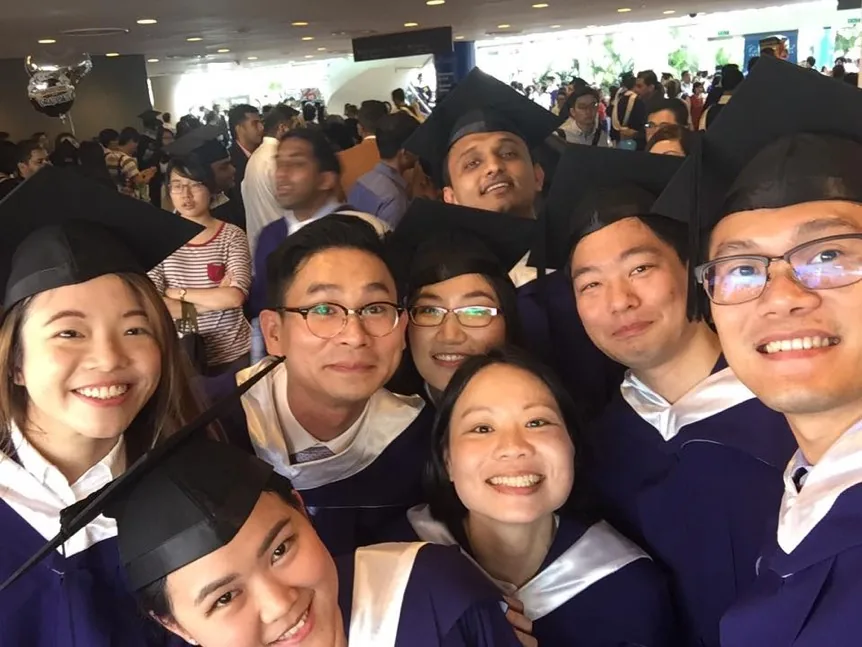
2017.7: MBA graduation ceremony at the National University of Singapore
Although I did not go on exchange during my GraSPP days, in 2015 I went to Singapore and the United States on government-funded study abroad. What I can say with certainty is that you should study abroad early. By breathing the air of another country and living in a world without the peer pressure of fellow Japanese, you become aware of the shared illusion that is “Japan.” I was interested in Asia’s venture ecosystem and was studying it—but in which field has disruption by innovators occurred the least? The Singapore government’s Smart Nation initiative made me realize that the answer is government administration. Many Japanese assume that government does not understand its users and is an inefficient presence. But turn that around, and it means there lies a great opportunity for transformation. Harness digital technology to build public services that citizens find easy to use—that is what I am now working to realize from within METI, advancing a variety of initiatives. I hear that the civil service is losing popularity as a career choice. But if you truly want to make an impact on society, the way to do it is to make the oldest things the newest. Many GraSPP graduates are active in the field of government digitalization. We are waiting for comrades to come from GraSPP and hack government together with us from the inside.