
This spring marks a milestone for me: ten years since I graduated and ten years since I started working. Here I would like to look back briefly on these ten-plus years, and I hope what follows will be of some help to all of you who read it.
- Before Entering GraSPP
I entered the University of Tokyo in 2003 in Humanities and Social Sciences III. At the time of admission, partly influenced by the fact that my mother had graduated from a university geography department, I vaguely thought I wanted to study human geography, and I had no connection whatsoever to the world of “the public.” One turning point was an internship at a TV station in the summer of my third year, which I applied for through the Educational Division of the Interfaculty Initiative in Information Studies. At the time I was interested in TV journalism; from the winter of my second year I had chosen to move on to the sociology program in the Faculty of Letters, which had broad connections in the media industry, and while also studying at the Educational Division of the Interfaculty Initiative in Information Studies, I had gradually begun to think about my career path. I took part in the internship with my future career choice in mind, and the dynamic workings of the TV industry left a deep impression on me. However, when the internship ended and I paused to look back, my honest impression was that “I just can’t picture myself working there.” At the same time, since I had originally wanted to study at graduate school as well, I also turned my attention to pursuing the path of a researcher, but I simply could not form a concrete image of research as a profession, and I began searching for a path that was neither the TV industry nor academia. It was then that I happened to learn of a blog by a GraSPP graduate, and I began reading it along with the GraSPP website. At first glance, the world of “the public” seemed to have nothing to do with me, but in fact my father was at the time a serving national civil servant, so when I thought about it, it was actually quite close to home. As I talked with my father, I gradually came to think, “Work that contributes to the public might be interesting,” and I decided on GraSPP as my destination. The reason was GraSPP’s interdisciplinary and practical curriculum. That, too, was described in the graduate’s blog, and I thought it was perfect for someone like me, who until then had had no connection to or knowledge of “the public” at all.
- From Enrollment to Choosing a Career (Learning)
And so, in April 2007, I knocked on GraSPP’s door. The life that began there, however, was a daily routine “tougher” than I had imagined. To begin with, I had never properly studied either law or economics before entering GraSPP, and on top of that, the summer semester of my first year coincided with my starting to study for the civil service examination; I realized keenly that I had underestimated graduate school. And yet, while I felt it was “tough,” it never gave rise to negative feelings, and looking back, I think I greatly enjoyed my student life. I also feel that through that process my intellectual stamina was gradually built up. In particular, the classes taught by a practitioner professor required a great deal of preparation, but that professor taught me the importance of bridging “theory” and “practice,” a lesson that I still draw on in my work today. It was extremely valuable. After the summer semester of my first year, I also did an internship at the Ministry of Land, Infrastructure, Transport and Tourism. Looking back after it ended, I became aware that I actually harbored a very strong desire to “contribute to the public,” and that “I love infrastructure.” Furthermore, as I listened to that professor, I also came to feel keenly the importance of contributing to the “regions,” and in that professor’s case study in the winter semester of my first year, I took local governments’ tourism policy as my theme. As I continued these reflections, I came to want to be involved in both “infrastructure” and “tourism” from a private-sector position while holding a “public” perspective, and I changed my intended path from the civil service to a railway company. I duly received a job offer, and in the winter semester of my second year I studied urban railway policy in an area related to railway companies.
- Friendships and Relationships with Professors (Connections)
Now, although it was the practical learning that drew me to apply to GraSPP, the “learning” was not the only priceless fruit I gained there. In terms of “connections” — friendships and relationships with professors — GraSPP also had a major influence on my life afterward. As Mr. Akao of the third cohort once pointed out, my time there was also GraSPP’s founding era, and the fourth cohort, myself included, overflowed with a wonderfully free and open atmosphere. The friendships cultivated through friendly competition and debate, both in and out of class, were truly assets for a lifetime. At the time there was no dedicated GraSPP building, and the economic policy course was housed separately from the other courses, but precisely because of that, I take pride in the firmness of the bonds that overcame this handicap. It is, so to speak, a marvelous relationship in which, with a single phone call, I can ask friends about anything — friends scattered not only across Kasumigaseki but across every industry. Moreover, my relationships with the professors who taught me so many things continue to this day. Beyond seeking their insights on policy issues and the like when we meet, I have — presumptuous as it may be — taken on the role of instructor at training sessions, and they have even attended my wedding; I feel these relationships remain as wonderful as they were during my student days.
- After Graduation and the Connection to My Current Profession (the Mindset Acquired at GraSPP and How It Links to My Work)
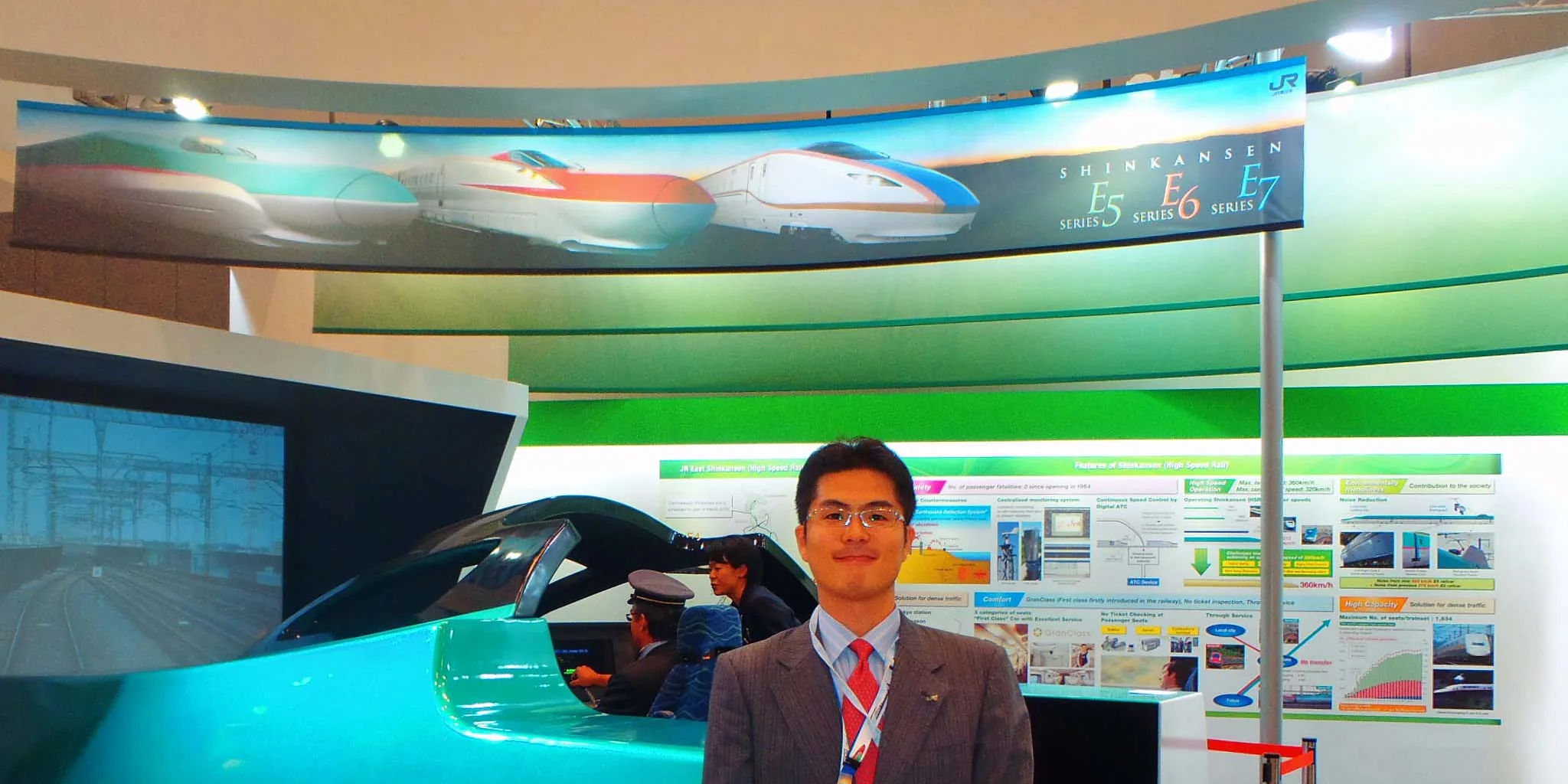
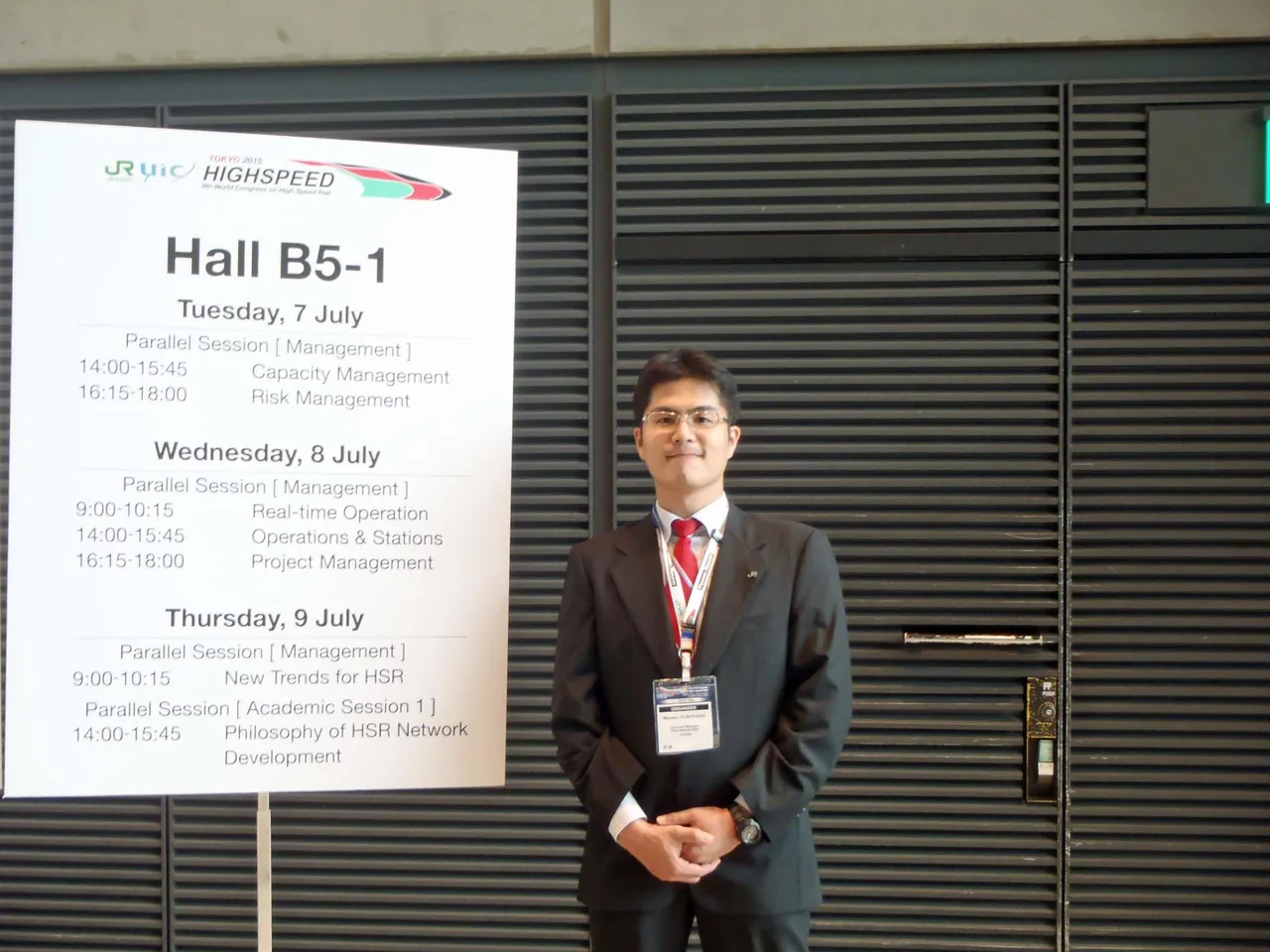
When I entered university my path was entirely undecided, but looking back, I believe it was precisely because of the two years I spent at GraSPP that someone like me, seemingly without any ties to the world of railways, became an employee of a railway company. What I was able to acquire during my studies, moreover, was not limited to the learning of individual policies described above; it was, I believe, a “big-picture perspective” — the ability to observe things from a bird’s-eye view. Thinking about things from a bird’s-eye view has been a great help in my subsequent corporate career, and I feel it has become one of my strengths. For example, I am currently engaged in work related to the India High-Speed Rail project, and when I step back and become conscious of the relationship between my own work and the policy process, a different world comes into view. There are also cases where, for instance, the autumn diplomatic calendar affects my upcoming work. As mentioned above, GraSPP built up my intellectual stamina — indeed, without it I do not think I could have made it through my nearly two years of study abroad (summer 2013 to summer 2015). In addition, after graduation I also had the good fortune to serve as president of the alumni association. Though it was a small organization, being given the experience of a position that holds an organization together gave me an opportunity to hone a kind of leadership that I could not have experienced through my regular work.
- In Closing
I sincerely hope all of you will take part in alumni association gatherings and events (only as your schedule allows, of course). I have written at length, but looking back, what I learned in class (learning), the relationships with friends and professors built over those two years and beyond (connections), and what I acquired from graduate school as a whole (a way of thinking) — I feel that every one of these is irreplaceable. For current students, the two years may end up being a headlong sprint, but when you suddenly look back after graduation, I think you will truly appreciate their value — so please treasure this very moment.