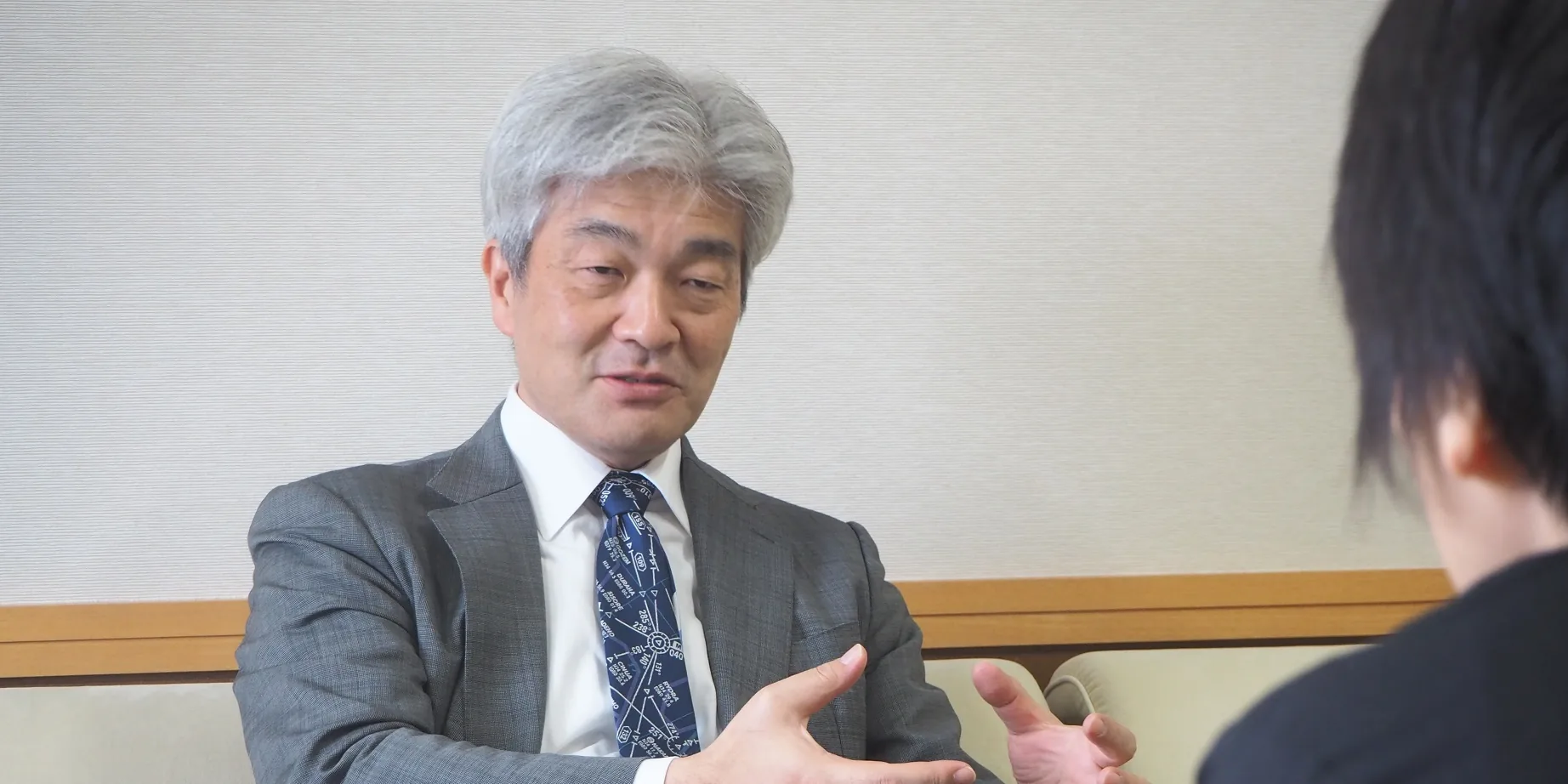

Biography
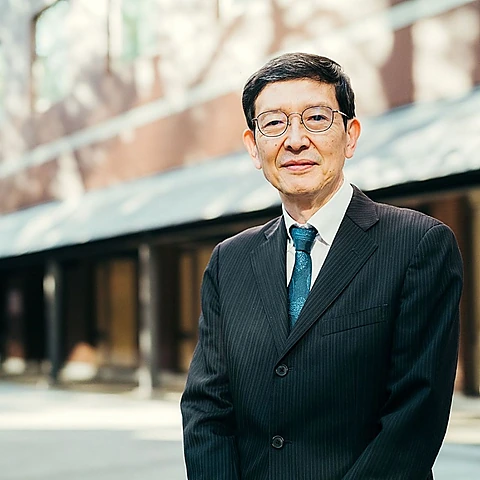
Completed his master’s degree at the Graduate School of International Relations, Ritsumeikan University, in 1995, and in 2000 completed the doctoral program in contemporary European studies at the Sussex European Institute, University of Sussex, UK. After serving as associate professor at the College of International Studies, University of Tsukuba; professor at the Public Policy School, Hokkaido University; visiting researcher at the Princeton Institute for International and Regional Studies, Princeton University; and member of the Panel of Experts for the UN Security Council’s Iran sanctions, he has been a professor at the Graduate School of Public Policy, the University of Tokyo, since 2020, and director of the Institute of Geoeconomics since 2022. He concurrently serves as a member of the Cabinet Office’s Committee on National Space Policy (chair of its Space Security Subcommittee), president of the Japan Association of International Security and Trade, full member of the International Academy of Astronautics, and visiting research fellow at the Japan Institute of International Affairs, among other posts.
Triggered by the U.S.-China confrontation, the world economy, which had at one point been moving toward integration, is beginning to fray. The international frameworks that stabilized postwar politics and economics are suffering institutional fatigue, bringing unprecedented risks to the world. As a scholar of international relations, Professor Kazuto Suzuki has watched in real time the world of these past 30 years, transformed utterly after the collapse of the Cold War. In 2020, he launched the Institute of Geoeconomics, a think tank exploring changes in international politics and the nature of economic security, and became its first director. He argues that 2024 marks a turning point at which the premises of global international political economy that held for the past 30 years are changing dramatically. We asked Professor Suzuki about how he came to open up "geoeconomics," a new field of international relations, and about his career so far.
――Professor Suzuki, I understand you grew up in the United States as a child. Did your interest in international relations also stem from that formative experience?
Suzuki: Because of the work of my father, who was employed at Kyowa Bank (now Resona Bank), I grew up in the United States. From age two to six I lived in New York, and then from partway through my first year of high school in San Marino, a suburb of Los Angeles, California. At the time, a high school drama called “Beverly Hills, 90210” was popular. That world — beginning with scenes of putting your belongings into your high school locker, out of which all sorts of human relationships unfold. After graduating from that American high school, I entered Ritsumeikan University in 1990.
When I first returned from New York in my early childhood, I was bewildered by the differences between myself and the friends and adults around me in how we perceived things and in our values. I didn’t know the TV shows my classmates had grown up watching as a matter of course. I couldn’t follow the premises of conversations, and the differences in ways of thinking were large. Perhaps because of that, I was bullied at times.
From such experiences, while I was obviously not American, I found it hard to call myself Japanese either. I developed the habit of constantly thinking about “who on earth am I?” And without expecting from the outset that people could empathize with or understand one another, I came to strive first to understand the other party’s logic.
Perhaps because of that, there is a part of me that keeps a slight distance from everything and observes it coolly. Value-neutral. It may be a trait suited to a scholar.
International relations, a branch of the social sciences, is a discipline that understands relations among nations by analyzing behavior and logic. For example, there are analytical frameworks such as the Policy Logic Model I developed in my doctoral dissertation (a model for understanding why a given policy was adopted) and Discourse Analysis (clarifying what discourse is used and by what logic a policy is being advanced). From behavior and outward communications, you come to know the other party’s logic, and you understand the logic of a party whose thinking differs from your own. Understanding history also becomes important.
For example, Israel has been in a hostile relationship with Palestine over a long history. In October 2023, a surprise attack was launched against Israel by Hamas, the Islamist armed group that exercises effective control over the Gaza Strip in the Palestinian territories. Hamas ended up creating a pretext for Israel to attack while asserting its right of self-defense, and Israel’s limiter came off — which has led to the fighting in Gaza since last year. Israel is a country in which the fear of being killed has been handed down continuously through its people. Prime Minister Netanyahu and his cabinet ministers in particular have become gripped by the conviction that, with the elimination of threats as their goal, protecting eight million Israelis comes before the lives of 100 hostages.
Japan, too, which renounced war, chooses its policies according to values formed by the experience of total defeat in World War II, and the logic of conduct it has built up lies behind the Three Non-Nuclear Principles and the like. But people overseas cannot share that as an intuition, because they cannot understand the logic behind it.
Understanding “the Differences between Self and Other” through Logic
――Was your interest in international relations — surveying the world, Japan included, from above as an “observer” — also largely due to your childhood experiences?
Suzuki: The year I graduated from high school during my second stay in the United States — around 1989 — was a year in which international relations changed dramatically. The Berlin Wall fell in Germany; the following year East and West Germany were reunified; and the year after that the former Soviet Union collapsed. In 1990 came Iraq’s invasion of Kuwait. In just a few years, the East-West Cold War, which had been a given since the day I was born, suddenly collapsed before my eyes.
The domestic situation also changed greatly. When I was around junior high to high school age, Japan was at the height of its bubble economy, and the United States of that era trembled at the fear of being supplanted by Japan. The Cold War ended while both the U.S. and Japanese economies were on an upward trend, and the image spread that international politics had ended in victory for the Western countries.
Around the same time, however, Japan’s bubble economy — which had been celebrated even as “Japan as Number One” — collapsed, and the country’s national strength tumbled as if rolling down a slope. In the world, too, the outlook grew ominous here and there, with the outbreak of the Yugoslav conflict, for example. The end of the Cold War did not mean the world would turn rosy. It was a situation in which one could not begin to imagine what would happen next.
Watching that chaotic world, I thought that if I studied the shape of the new world, there was a chance to open up an entirely new field of scholarship. For me at the time, there was no option other than studying international relations.
――Looking back over these 30 years, what changed most in international society after the collapse of the Cold War compared with before?
Suzuki: Free trade advanced, countries all over the world became economically interlinked, and the economy became more important than ever before. The Cold War collapsed in the first place because the socialist economic system could no longer hold up within a globalizing economy. As international economic competition intensified and the world changed greatly, what I focused on was Europe, which aimed at integration through the Maastricht Treaty.
In advancing economic integration, Europe was taking on the challenge of building a new framework of political integration as well, and I took note of it as suggesting a new way the world might be. Countries with their own distinct histories were aiming for integration even at the cost of transferring part of their sovereignty. What background lay behind this? As I studied European integration with such questions, I encountered the book “British Space Policy and International Collaboration” by Dr. Helen Wallace, a world authority on European studies. It was a study of European space policy.
Researching European Space Policy
――At the time, the fierce U.S.-Soviet space race stood out. Why did you deliberately focus on European space policy?
Suzuki: This book is based on research that Dr. Wallace published in 1985 — when she was head of European studies at the British think tank the Royal Institute of International Affairs (Chatham House) — in International Affairs, a peer-reviewed academic journal with a long history. At the height of the fierce U.S.-Soviet space race, it analyzes the process by which Britain and Europe decided how to become involved when the United States launched the International Space Station as a multinational project, and the substance of those decisions.
Security is domestic policy and the economy is global policy, but what engages with both is science and technology, such as space policy. I came to understand that science and technology act as a catalyst for the economic integration of the individually independent countries of Europe, and I became deeply interested in the combination of economy, technology, and the state.
Overshadowed by the U.S. and the Soviet Union it attracted little notice, but Europe had in fact been pursuing carefully crafted space policies since the 1960s. As I read on, there were many moments of “What? They were doing this too?” — it was full of things I had not known, and I was greatly shocked. I was also blessed with opportunities to talk with Dr. Wallace at academic conferences in Britain and elsewhere, and I thought, “If I am to study under anyone, it can only be this person.” And so I entered the doctoral program at the University of Sussex in the UK, where Dr. Wallace was then based.
Organizing Space Systems into Three Concepts
As one culmination of the space policy research I had built up, in 2011 I published “Space and International Politics” (Uchu Kaihatsu to Kokusai Seiji, Iwanami Shoten; winner of the Suntory Prize for Social Sciences and Humanities). As an analytical framework for space development in international politics, it organized and presented space systems in terms of three concepts: “hard power,” “soft power,” and “social infrastructure.”
――Your research drew attention, and you also became involved in the decision-making arenas of international politics.
Suzuki: For two years from 2013, I served as a member of the Panel of Experts of the UN Security Council’s Iran Sanctions Committee. Decisions could not be made without a solid understanding of the Middle East situation, so after being appointed I began studying the Middle East and learned a great deal through the practical work. I visited many places around the world, and wherever I went I was seized by the sense of acting as a representative of Japan. That said, even if Shohei Ohtani moves from the Angels to the Dodgers, Shohei Ohtani is still Shohei Ohtani. He works hard for Team Japan, but it is not a matter of single-minded devotion to one team; ultimately, it is individual ability that is tested. I, too, give everything I have, but it is not that I am doing it for Japan’s sake.
Seeing the world, I felt keenly that the advance of globalization had clearly separated winners from losers. Belonging to a larger organizational unit — a nation, an organization — and assimilating oneself to it may now be increasingly prone to strain. If, for example, you fall into the heteronomous mindset that because your company is not doing well you are not doing well either, you end up letting others decide your life.
――In the United States, protectionist policies are strengthening and divisions are deepening.
Suzuki: What underpinned the 30 years of advancing globalization was the promotion of free trade through the WTO (World Trade Organization). The belief was that it is most efficient to minimize state interference, with national politics intervening as little as possible, and to let the economy run on economic logic and market principles. Free trade expanded, and free trade agreements setting multilateral trade rules came into being, such as the CPTPP (Comprehensive and Progressive Agreement for Trans-Pacific Partnership, or TPP11). No matter who traded or invested where, building globally optimized supply chains and business models was the accepted practice, I think.
2010 as the Trigger for the “Weaponization of the Economy”
Now, however, my view is that this 30-year world system is changing greatly. The “weaponization of the economy” is now under way. It has become clear that when countries differ in the resources they hold in abundance — one country rich in natural resources, another possessing technology — and a country’s politics takes control of them, they become powerful weapons. Judgments based merely on “this country is cheaper, so let’s buy from it” or “let’s invest there” no longer hold up. That is why I concluded that we need geoeconomics: a discipline that cuts into geographically defined relations between states from the economic side.
Until now, my research theme had been what would become of the contradiction that, while the world economy was integrating, states themselves remained independent and separate. But now a reversal is occurring: states are taking the upper hand and dismantling the economy that had been integrating.
In the European integration I studied at the start of my career, politics moved at the pull of the economy: because the economies were integrating, the states had to integrate too. But this time, states are using their own authority and power to pull that economy apart. Politics exerting influence over the economy and partially unraveling an integrated economy — that is the world of geoeconomics today.
――Where would you place the starting point?
Suzuki: As economic interdependence strengthened, all kinds of economic exchanges and transactions also developed between the United States and China. If economic efficiency were the only consideration, then once making something 100 percent in China proved cheaper, you would end up depending on China entirely. But if that is suddenly slammed shut by political power, the people who had depended on China have the ladder abruptly pulled out from under them and plunge into the abyss. That is what actually happened in 2010.
An incident occurred off the Senkaku Islands in Okinawa in which a Japan Coast Guard patrol vessel and a Chinese fishing boat collided. Tensions rose in Japan-China relations, and China drastically cut its export quotas for rare earths, which are indispensable for electric vehicles, smartphones, and the like; Japanese industry, which at the time depended on China for about 90 percent of its procurement, was in real trouble. Dependence on China had become a given because China was cheaper, and no one had dreamed that something like an export halt would be done to them. I think this event became one of the wake-up calls for society.
We thought we had been trading freely, but we had been able to do so freely only because governments happened not to intervene. If a government sets its mind to it, it can stop trade at will, regulate it, and change the rules. From that realization, a broad understanding — what is called economic security, or geoeconomics, in which geographic power relations extend even into the economy — rapidly became important.
With clothes, too, once a hole opens it gradually grows until the fabric rips apart. We have to keep watching whether the world situation will reach such a state. We need to view it through the framework of geoeconomics.
A World Coming Apart
――What had been coming together almost as one economically is now, rather than dividing, scattering apart into autonomous fragments.
Suzuki: The most symbolic example is the Trump administration. Since World War II, it had been said that the integration of the world economy was in America’s interest; Trump began to say no, that works against America — that to protect its interests, America must put itself first and sever economic integration. The Biden administration carried this on, imposing export controls on semiconductors, for example. In this way they keep cutting off free trade, continuing the work of snipping the threads that had connected things until now. The image is of things fraying here and there, gradually coming apart.
If liberalism is pushed further, comparative advantage through integration comes into play, so advanced countries will put more effort into research and development and innovation. Startups and the IT (information technology) industry were born precisely because of the free economy. But what is generated at the same time is inequality. Wealth and power concentrate in the winners, such as the IT industry, which pulls the new economy forward — but behind them, many losers emerge in comparatively disadvantaged sectors such as manufacturing. As globalization and the integration of the world economy advance, those who win win enormously, and those who lose become utterly miserable. I think this is one of the driving forces generating populism.
As integration advanced, the swing all the way to neoliberalism resulted in the steady loss of mechanisms for correcting inequality — through the abandonment of welfare-oriented policies, for example. The sense is that efficiency was emphasized so much that the backlash grew large. That is now reflected in populism, the Trump phenomenon, and protectionist own-country-first politics — policies that prioritize national interest.
Furthermore, deciding to simply ignore international rules, or valuing one’s own interests over world order — the move to maximize national interest in this way began with Russia’s invasion of Ukraine. Some great restraint came undone, the Middle East situation was added on top, and things became impossible to contain. If each country pursues only its own interests, the threads that connected the world will fray further and further and become impossible to repair. That is the situation today.
The Era When Free Trade Deterred War Is Ending
――What kind of world does this reverse rotation of globalization ultimately lead to?
Suzuki: The long-held belief that free trade produces peace is not accurate. In fact, liberalism, by raising the costs of war, serves as a deterrent to war, but it did not eliminate war. When people who are, so to speak, the losers of the globalized world come to hold power, the benefits to be gained by waging war come to outweigh the economic costs.
Economic interdependence raises the cost of war, but when the side that wants war comes to perceive benefits that exceed that cost, it begins to wage war as an option.
――For Japan the costs of war are enormous, but a country with nothing to lose does not hesitate.
Suzuki: Russia has nuclear weapons of its own, so it will not be attacked, for one thing. Even with the risk that the income from selling gas and oil to Europe would stop, Putin must have felt there was greater benefit in conquering Ukraine. Economic sanctions are no deterrent. That is why the war has continued for nearly three years.
――At times like these, we must all the more carefully understand the other side’s calculations according to its own logic.
Suzuki: The calculation of costs and benefits. It has become clear that there are dictators who reckon the benefits of war to be greater than we had calculated. As long as there are countries that believe they will gain more from war, war will never disappear. If a country comes to believe that fighting is the only way to solve the problems it faces, it has no choice but to go to war. However much we wish for peace, if there is a country that wants war, war will break out.
Social Cohesion Requires Someone “Responsible”
――Speaking of the relationship between technology and the state: if AI (artificial intelligence) were the leader, for example, would such decisions no longer be made?
Suzuki: AI has come to take on routine tasks and part of human judgment. I see no problem with AI performing standardized actions. But I believe humans have a desire to have others decide troublesome matters for them. If that reliance on others snowballs, we lose, before we know it, the capacity to decide for ourselves — and even something like the Holocaust could happen. Entrusting to AI what humans must inherently take responsibility for judging carries great risk. If AI-driven autonomous driving causes an accident involving casualties, who takes responsibility? What matters in maintaining the cohesion of society is deciding who takes responsibility. It is precisely because of the premise that someone will take responsibility that society holds together.
――Amid international relations that will differ from what came before, what should individuals keep firmly in mind?
Suzuki: We are entering an era in which the international situation will be ever harder to read. It will be important for each person to understand others not through emotion or belief but through the logic behind them, and to act while also firmly understanding what the consequences of one’s own actions have turned out to be.
(Interview and composition by Ayako Hirono, Deputy Editor, Nikkei Business)