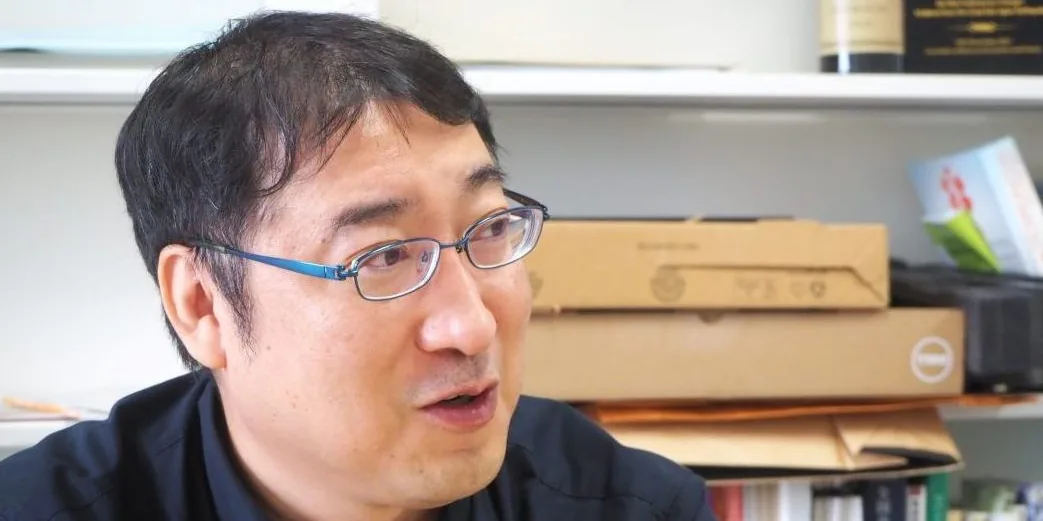

Biography
Graduated from the Faculty of Engineering, the University of Tokyo, in 2001, received a master’s degree in engineering from its graduate school in 2003, and earned a master’s degree in international affairs at the graduate school of Columbia University in the United States. In 2012, he received his Ph.D. in economics from the same graduate school. He then engaged in research and teaching at the Department of Economics, Simon Fraser University, Canada. He currently serves on the editorial boards of leading peer-reviewed academic journals such as the American Economic Journal: Economic Policy and the Journal of Health Economics. He also holds concurrent research positions at the National Bureau of Economic Research (NBER), the Institute of Labor Economics (IZA), the Research Institute of Economy, Trade and Industry (RIETI), and the Center for Research and Education in Program Evaluation (CREPE) at the University of Tokyo, and serves as an advisor to UTokyo Economic Consulting (UTEcon). In 2024, he received the Ishikawa Prize from the Japanese Economic Association for his empirical research on free healthcare for the elderly and children. Born in Sakai, Osaka Prefecture.
"Making children's healthcare free invites excessive doctor visits." "Japan is clearly a backward country when it comes to data." Professor Hitoshi Shigeoka regularly delivers incisive recommendations based on his own empirical research through economic media and other outlets. In 2024, he received the Ishikawa Prize, a prestigious award of the Japanese Economic Association. His original research, marked by a brilliant sense for questions, stirs the interest of non-researchers as well. In a study published in 2014 in the American Economic Review, a peer-reviewed journal that is one of the pinnacles of economics, he used data to show that the 10 percent copayment for elderly patients' healthcare could lead to a dramatic surge in outpatient numbers. This was a natural experiment in causal inference — the method used in the prizewinning research of David Card, Joshua Angrist, and Guido Imbens, who won the 2021 Nobel Prize in Economics. An engineering major as an undergraduate, he says he first encountered economics only after entering graduate school in the United States. We asked him about his path to becoming a top-class economist active on the world stage, and about the concerns he pours into his research.
――Professor Shigeoka, alongside your energetic research, you have persistently advocated for containing healthcare costs and, further, for the importance of government data provision, and you keep speaking out. You have the image of an unwavering researcher.
Shigeoka: Oh no, not at all (laughs). If anything, I think I lack a fixed core. As for my research topics, I simply take up whatever theme seems most interesting at the time, together with co-authors with whom writing papers is fun — my themes are not really consistent. Of course, my specialty is health economics, and while I learn different ways of thinking and different methods by engaging with various other topics, health economics is what I ultimately come back to. For example, I find it hard to imagine how firms behave, so for now I have done little research of that kind. Conversely, I actively take on themes I can understand from experience and easily imagine, such as the behavior of people who go to the doctor as patients. If you look at my papers, you will notice that I use almost no mathematical equations. Or rather, it’s just that I can’t use them… (wry smile).
I Hold No Beliefs about How Things “Should Be,” and Yet…
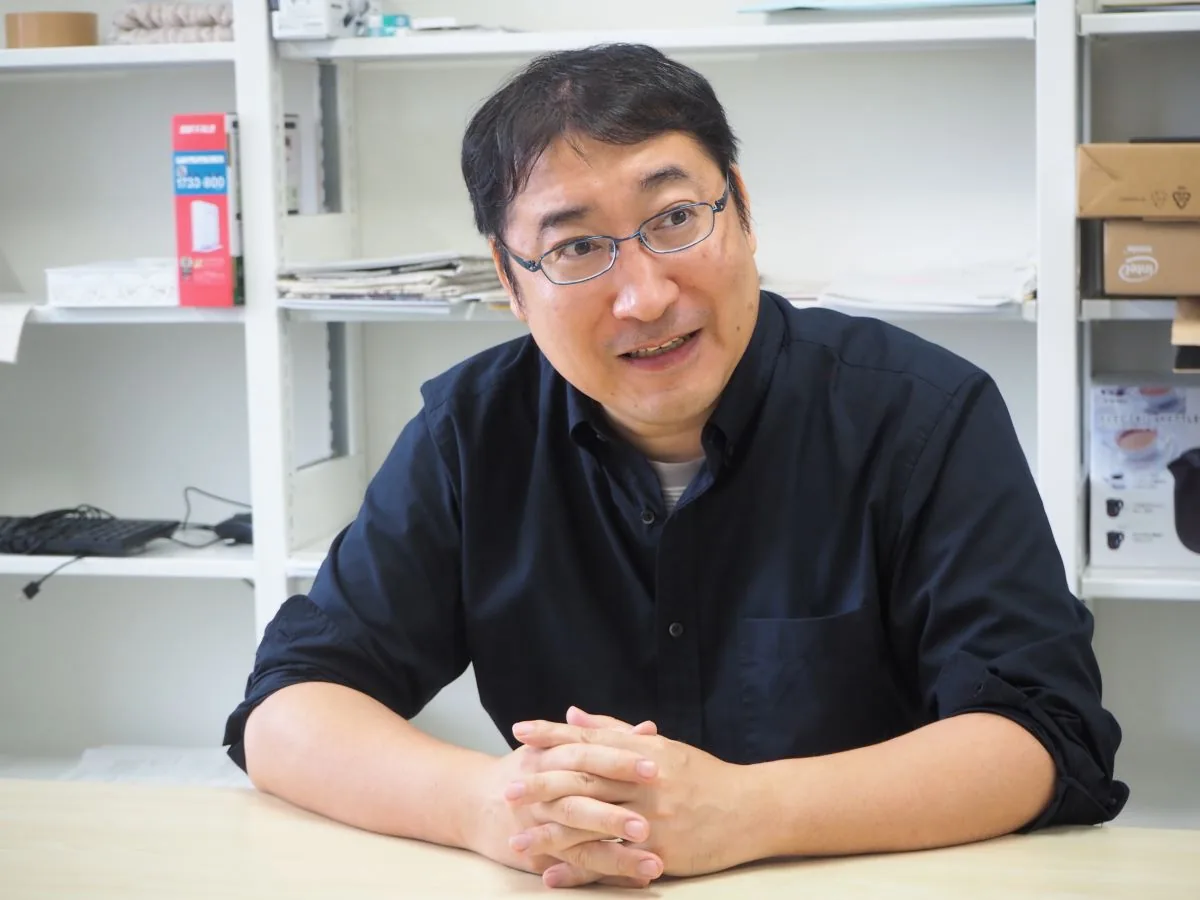
I have done many studies on social security policy, but I have no strong convictions about how Japan ought to be. If you have convictions, there is conversely a danger of bias creeping in when you analyze data — feeling the results ought to come out a certain way. I feel that the very raison d’être of scholars lies in being able to take as neutral a standpoint as possible. My approach is to research questions that strike me as doubtful from an ordinary person’s perspective — is it really right for this to be free? — verify them with data without preconceptions, and, once the results are in, publish them as papers.
――What led you to aspire to become a researcher?
Shigeoka: My father was a scholar in the sciences, and when I was a child, students from his laboratory were constantly coming and going at our house, so I grew up seeing nothing but budding scholars. On the other hand, I had no contact with people who worked at companies, and perhaps the biggest factor was that I found it hard to picture myself working as a company employee.
To Arizona on My Father’s Sabbatical
――I hear you lived in the United States as a child.
Shigeoka: My father, a scholar, went to the United States for a year on sabbatical, and we lived for about a year in a town called Tucson, in the state of Arizona. Cacti grew naturally in the yard and summer temperatures topped 40°C — a natural environment unimaginable in Japan. I lived there between my first and second years of junior high school, but I could not speak English at all. Only in math was I top of the class, but because I could not read English, word problems were the one thing I could not do, and I always lost points there.
Still, even without English, once I practiced basketball and American football and got good at them, the Americans accepted me and let me join their circle. Looking back now, that was when I came to feel that “I can manage wherever I live” — any odd resistance I had toward going abroad disappeared.
At the combined junior and senior high school I attended after returning to Japan, many students aimed for Kyoto University, and only three of us, myself included, went on to the University of Tokyo. I entered Natural Sciences I, the engineering track, and majored in chemical system engineering. I did research on methods for treating plastic waste and on electrolyte membranes for fuel cells, among other things.
――Why, then, did you switch to economics?
Shigeoka: The truth is, I was very bad at math. Even on the University of Tokyo entrance exam, however I scored my own answers, it seemed I passed thanks to my good marks in Japanese and English. My math grades at the university were poor too, so I was nowhere near the level needed to apply directly to a doctoral program in economics — so much so that in the master’s program at Columbia University, where I went to study, I relearned mathematics alongside undergraduates.
Dazed during an Experiment: “I’m Not Cut Out for Science…”
――Your standard for being “bad at math” probably differs from ordinary people’s, but I am surprised. For study abroad, you entered Columbia University’s School of International and Public Affairs (SIPA) in the United States at the master’s level and went straight on to the doctoral program. Why did you choose a graduate school overseas?
Shigeoka: During my master’s program at the University of Tokyo, my days were consumed by experiments. It wasn’t that I disliked experiments, and pulling all-nighters was normal in those days. But one day, dazed after an all-nighter, I got the opening and closing of a gas cylinder backwards. As I mentioned earlier, I was bad at math, chemistry, and physics alike, and I had already been vaguely feeling that I was not cut out for science in the first place. When I made a mistake that, one step further, could have cost lives, I thought to myself in the strongest terms, “I really am not suited to science,” and steeled myself to change course, you might say.
Unable to Wait 15 Years as an Organization Man, onto the Researcher’s Path
――You must have felt, “This isn’t it.”
Shigeoka: I had originally gotten into research because I wanted to transfer environmental technologies to developing countries, so as a new graduate I went job-hunting hoping to join an international organization. But a person there told me, “After you join, it takes a good 15 years to become a full-fledged professional,” and I thought, I can’t wait that long. I very much wanted to be involved in policies like the transfer of fuel-cell technology, but in Japan there was no career path for it. So, I turned my eyes overseas. My family, for its part, was if anything in a welcoming mood about a doctorate, so going down the researcher’s path felt natural. I entered Columbia’s graduate school in 2003, which means I lived abroad for 18 years after that.
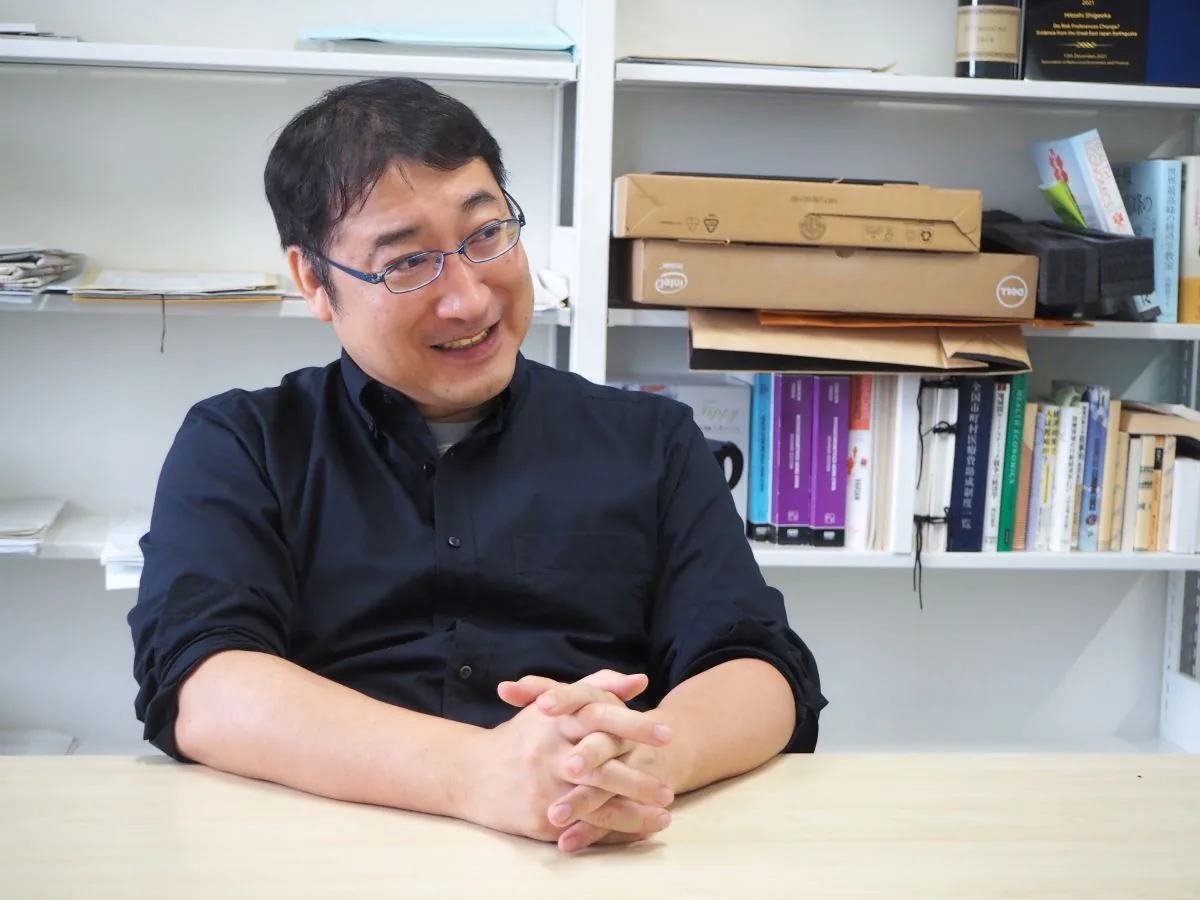
――So your encounter with economics came in graduate school. A relatively late start.
Shigeoka: I studied economics for the first time after entering SIPA. It depends on the university, but public policy programs, being interdisciplinary, have large gaps in knowledge from one student to the next, so the level of difficulty was not all that high — which I think was good for me. It was there that I first learned that economics is a discipline that expresses human behavior in mathematical form and analyzes things like how people respond to incentives.
Until then, I had been doing lab experiments, trying out all sorts of things in an environment where we could control everything, so it had never even occurred to me to model and mathematize human behavior, which in a sense cannot be controlled. That was fresh and exciting to me.
――Your first position was at Simon Fraser University in Canada. Did you not consider returning to Japan?
Shigeoka: The main reason I stayed abroad was that I thought, if you want to compete on the world stage, you should be in the United States, or at least in North America. Being in Japan, geographically far from North America and Europe — the centers of economics — I had a fear of becoming Invisible, so I decided to first give it my best until I obtained tenure (the lifetime appointment of a professorship).
――Invisible?
Shigeoka: The world of economics is a harsh one, said to be “publish or perish.” The home of economics is the United States, so academic conferences and research seminars are lively — illustrious guests visit nearly every week to present their research — and the quality and quantity of the research you encounter and the people you can meet day to day are overwhelmingly different.
Also, belonging to a North American university as a doctoral student and being involved as faculty entailed entirely different patterns of behavior. Constantly thinking about what it takes to earn tenure within the six-year time limit, and striving in friendly competition with those around me — hearing about it and actually doing it were worlds apart. Besides, unless you experience something other than Japan, you cannot even compare anything with Japan.
If You Want to Compete Globally, Be Overseas
What I came to realize is that if you want your research to be widely recognized around the world, you are better off first staying abroad rather than returning to Japan. Unless life overseas truly does not agree with you, and as long as circumstances permit, researchers aiming for the world should first be overseas. Japan is, after all, physically too far away.
There is a big difference in your on-site performance between flying more than 10 hours on a two-night, three-day trip and presenting at a conference or seminar exhausted with jet lag, versus being within a casual two-to-three-hour trip. Likewise, even quite big names will readily come if they can get there in a quick two or three hours. Simon Fraser University is in Vancouver, Canada, and in that sense — with direct flights to Boston and the West Coast, where conferences are often held — I was fortunate.
Family Circumstances Prompted Basing Myself in Japan
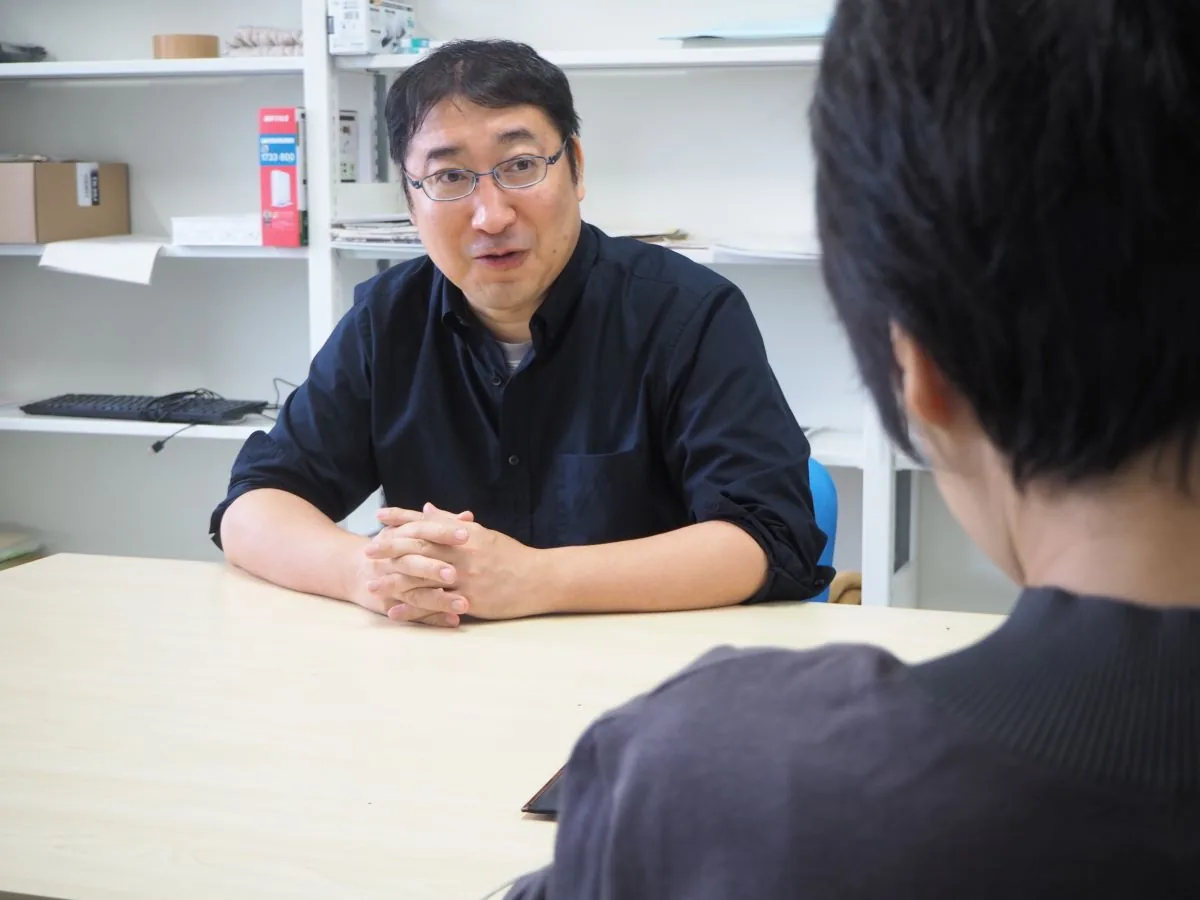
――While continuing to be active worldwide, you moved to the University of Tokyo in September 2021. What prompted the move?
Shigeoka: In terms of research environment and salary, I think overseas is overwhelmingly more advantageous. People return to Japan for all sorts of reasons, but I sense that family circumstances — matters involving children or a spouse, caring for aging parents — are the most common. In my case, too, family circumstances were a major factor. Not long after I obtained tenure at Simon Fraser, there was a death in my family. Having also achieved tenure, which had been my goal, I felt it was a good time to return. Without something like that, I might conversely never have been able to make up my mind. At the time, amid the COVID-19 pandemic, I could hardly go to the university, which was also a big factor. Life has its right moments, it seems.
――Though you are active globally, your personal webpage is not all in English: each of your studies comes with a very accessible Japanese summary. Did you write them yourself?
Shigeoka: Yes. I wrote them in the hope of helping people in Japan understand my research, even a little. When I ask companies and others for cooperation, such as providing data, they can look at the website and see what kind of research I do. Thanks to that, there have been cases where a cooperative arrangement was established very smoothly.
Evidence-Based Prioritization Is Needed
――Research using detailed corporate data, especially data from large companies, has great impact, and the social impact of policy-related research is enormous. Your research on free healthcare for the elderly has been included in economics textbooks not only in Japan but also in the United States. You also make recommendations yourself in the media.
Shigeoka: Well, my research findings are not difficult. Things that truly should be free, like vaccinations, should be made free, I believe. But the data showed that if you make everything free across the board, more and more people go to the hospital even when they don’t need to, and the nation’s healthcare cost burden balloons further and further. With a declining birthrate and aging population, the number of workers who can pay social security costs is shrinking year by year; today’s Japan no longer has the financial leeway to keep pouring out healthcare spending. In short, what I am saying is that we need evidence-based prioritization, not rough-and-ready accounting.
To be honest, I also received inquiries from various organizations that amounted to scoldings. On the other hand, my work has been taken up in the Diet, and I do think that discussions based on such data analysis have gradually begun to take place in Japan as well.
――You raise concerns not only about the elderly but also about zero out-of-pocket payments for children.
Shigeoka: I have written about three co-authored papers on this, and at the Ishikawa Prize award ceremony I had the opportunity to present their findings in my lecture. For a general audience, I contributed an article to the Nihon Keizai Shimbun in 2018. Honestly, I naturally don’t think that moved the world in any major way. But the head of a local government who saw the article came to consult me, saying, “I am thinking of raising out-of-pocket payments.” Things like that make me happy.
It Is Not a Question of the Elderly versus Children
The healthcare cost burden for the elderly and for children is a difficult issue. From the standpoint of fathers and mothers raising children, one is tempted to think: if we are devoting that much healthcare money to the elderly, why not redirect the money to child-rearing? Emotionally, I understand that very well. But that is a separate matter — we should address the problem of healthcare costs for the elderly, and we should also properly address children’s healthcare costs. At the risk of repeating myself, Japan does not have enough money, or else it is not allocating it well. Research funding, too, is an order of magnitude smaller than overseas, and even when data can be used, cumbersome procedures make it hard to work with. Salaries are low, making it difficult to attract international scholars.
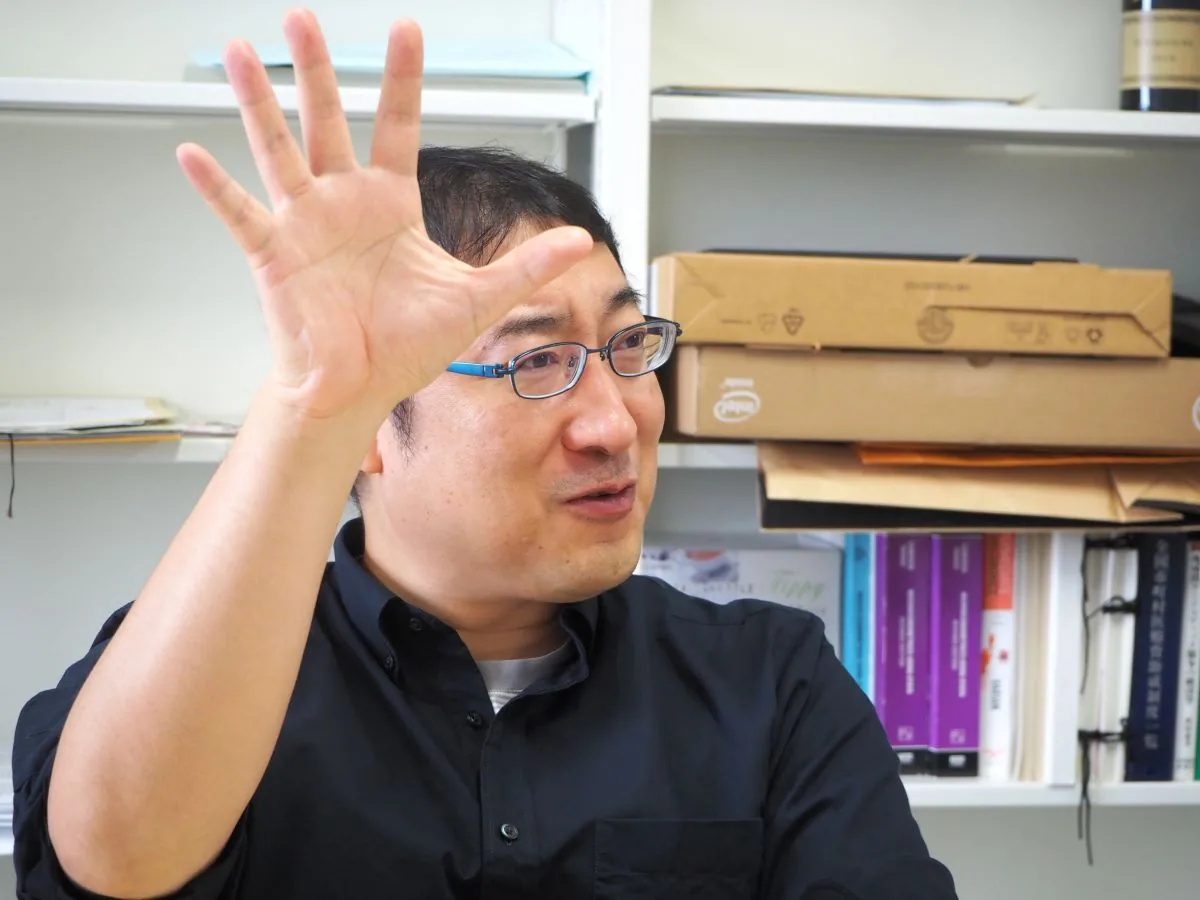
――Even so, seeking a research environment of higher precision through still more detailed data, you have made recommendations on developing public data held by the government and others.
Shigeoka: Government data is a public good, so if the data is properly developed, research will advance and many people will benefit. At a Cabinet Office study group, drawing together the views of researchers, I recommended — feeling that I was, in a sense, representing researchers — that the cumbersome procedures involved in using data be eliminated.
When the policy of raising out-of-pocket payments for elderly healthcare to 20 percent was debated, too, the income threshold was bandied about without any grounding: one party says X0,000 yen, another party says Y0,000 yen, so let’s take something in between. In such cases as well, discussion based on data analysis rather than political horse-trading is far more rational and persuasive. But when it comes to data infrastructure, Japan is now in a very precarious state: no data, and no people either.
――How do things stand overseas when it comes to data infrastructure?
Shigeoka: The Nordic countries are the most advanced. With universal citizen identification numbers, information is easy to obtain. The United States has Social Security numbers (SSNs), but it is not as advanced as Europe. That said, the U.S. is characterized by its large number of researchers and by the many cases where individual states, at their own discretion, provide valuable data. Even when the data you want does not exist at the national level, it often exists in some state and there are many situations where it can be put to use. I often feel frustrated that if data infrastructure were further developed in Japan too, we could do more interesting research and make an impact on the world.
Where Are the Seeds of Japan Moving in a Positive Direction?
――How do you feel about Japan’s future?
Shigeoka: To be honest, I find it difficult to spot the seeds of this country moving in a positive direction. No new industries are growing, and universities, short of money, find it harder and harder to do groundbreaking research. Of course there are many good things — the food is delicious, public safety is good, people are kind, and the population is on average well educated. Though almost all of them are aspects other than research.
Japan’s Crisis Is Researchers’ Opportunity
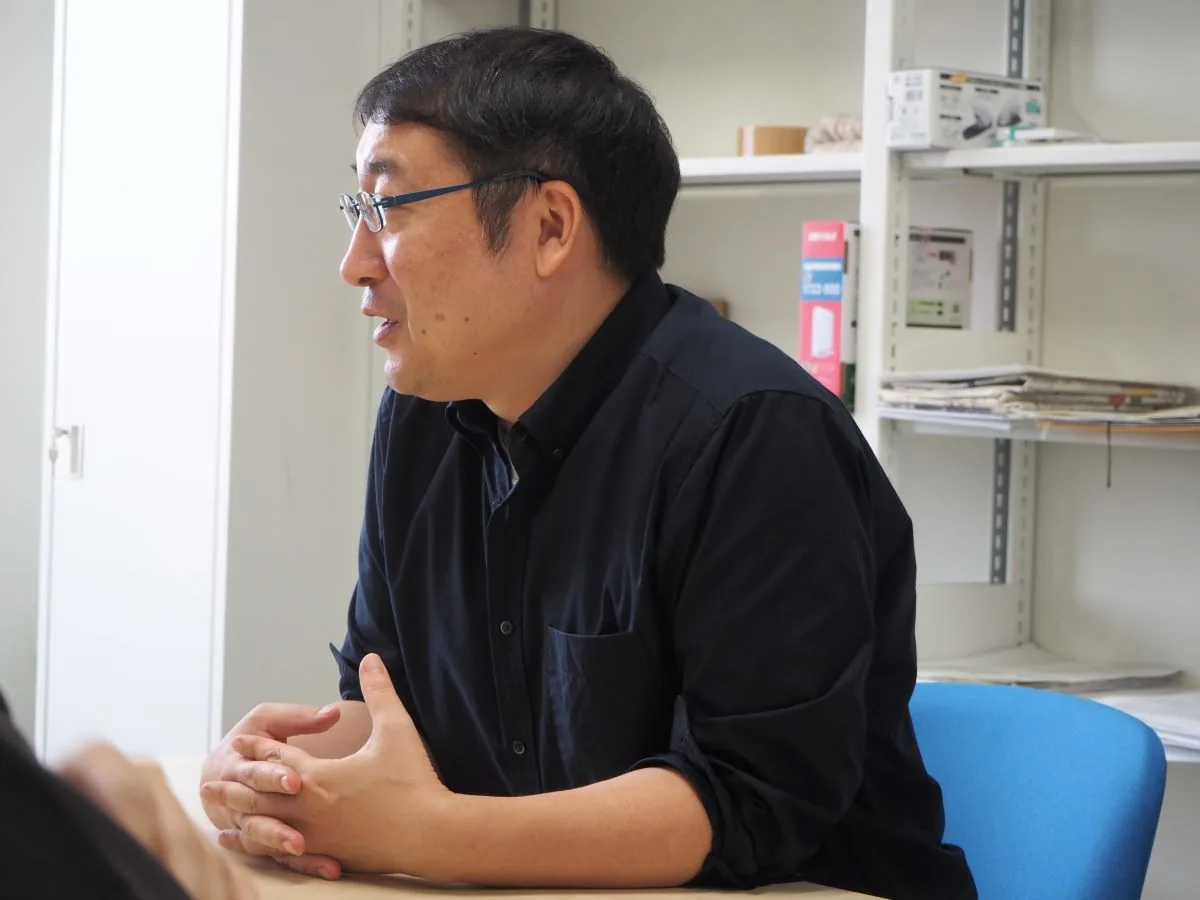
For researchers, however, it is also an opportunity. As an undergraduate, I was in the laboratory of Professor Hiroshi Komiyama, who served as the 28th president of the University of Tokyo (and is now chairman of the Mitsubishi Research Institute). Back then, Professor Komiyama said that Japan is an advanced country in challenges, riddled with problems — but that, conversely, this means just as many chances to create something new. If we could truly do something about the declining birthrate and aging population, it would be Nobel Prize material. We have no choice but to look squarely at and understand the situation Japan is in, and then think about what we can do.
I want the younger generation, too, to be able to experience the thrill of a new world opening up. In my day, we could still dream of living better than our parents’ generation, but as things stand, the mood is probably more like hoping things don’t get any worse. Disasters will increase from here on, stable long-term employment looks set to disappear, and people are told they will need reskilling when they get older. Young people may have no impression other than that working in Japan looks hard.
That is exactly why I want them to look overseas as well. Being at the University of Tokyo, I think there is a tendency to come to believe you are number one, but overseas there are any number of people even more brilliant. Seeing, even once, a world full of overwhelmingly talented people, and understanding Japan while feeling the gap between them and yourself, will, I believe, eventually lead to opportunities for your life to take a great leap.
Do What You Want, Whenever the Thought Strikes You
In Japan there is a tendency to decide on a career early, but I think that whatever you love, whenever you start it, things work out to a reasonable degree. Whenever the thought strikes you, I think you should throw yourself wholeheartedly into what you want to do.
――Going forward, what kind of research do you want to do and share with the world?
Shigeoka: I love all of the research of Professor Steven D. Levitt of the University of Chicago, known for unique studies such as analyzing match-fixing in sumo with data, whose book Freakonomics (the Japanese translation, “Yabai Keizaigaku,” is published by Toyo Keizai) became a worldwide megahit. I am also very fond of the research of Gordon Dahl of the University of California, San Diego, and Professor Ray Fisman of Boston University. My ideal is research like theirs — where, by the time you finish reading the paper, you have become a little wiser in some way, or a way of thinking different from before has sprouted within you.
Much of my own work now may be practical research that looks likely to be useful for policy. But beyond that, I yearn to write papers whose usefulness may not be apparent at first glance, yet which make people say, “This research is fascinating!” and get the experts talking — “This is incredibly clever,” or “I never would have thought of that.” Even just one in my lifetime would be enough — I would love to write an original paper like that.
(Interview and composition by Ayako Hirono, Deputy Editor, Nikkei Business)