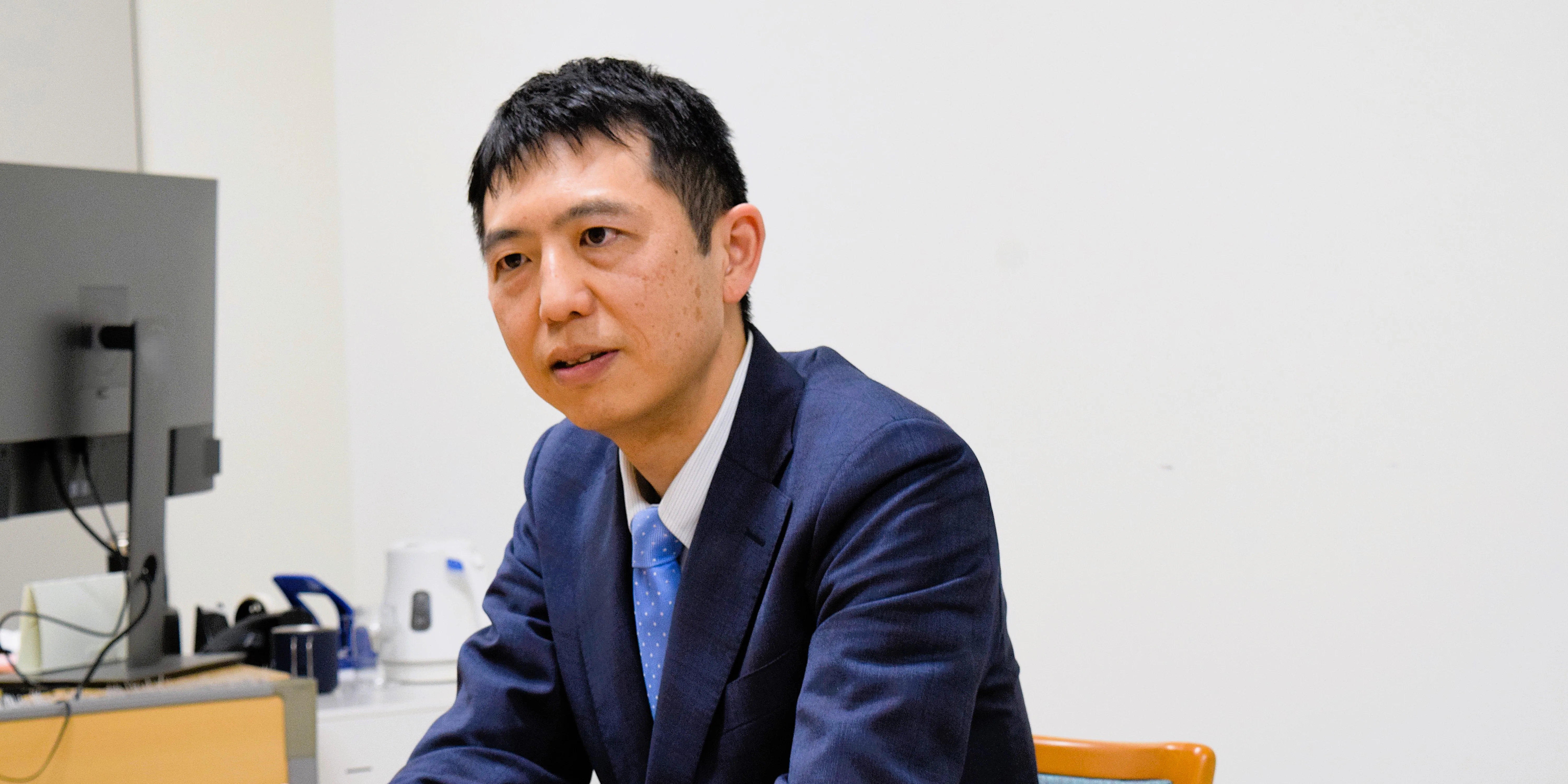

Biography
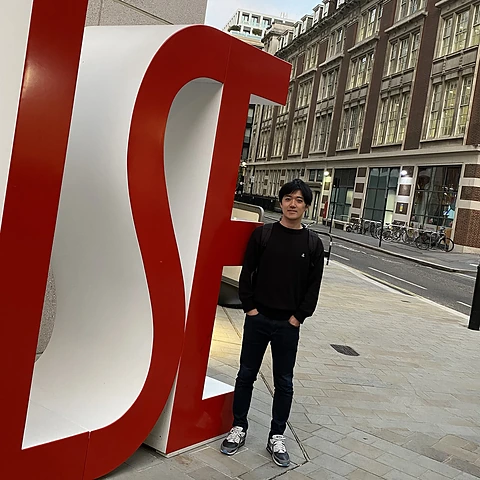
Graduated from the Faculty of Law, the University of Tokyo, in 2003 and joined the National Police Agency. Completed a master’s program in public management at the London School of Economics and Political Science (LSE) in 2009, and a master’s program in law at the same school in 2010. Professor at the Graduate School of Public Policy, the University of Tokyo, since 2024. He teaches the courses “Public Management II,” “Fundamentals of Policy Analysis and Planning,” “Introduction to Intelligence,” and “Case Study (Analysis of International Affairs).”
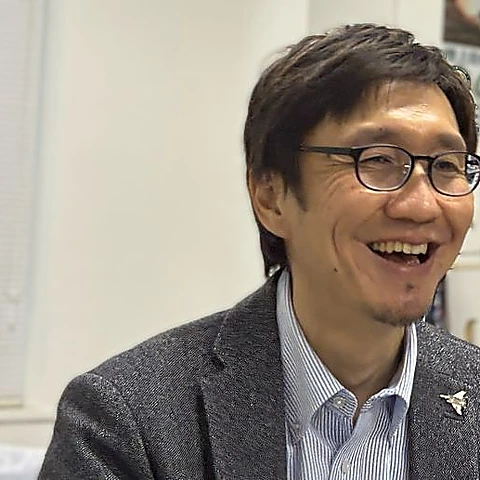
In recent years, the global security environment has grown increasingly severe and uncertainty has risen. The importance of intelligence for protecting national interests is rising ever higher, yet there are few occasions in Japan where its workings are widely discussed. Intelligence tends to evoke images from movies and the like, and is generally associated with flashy information warfare. But intelligence is in fact a steady, thoughtful activity: sifting out what matters from an overwhelming flood of information and engaging with the "questions" of policymakers. We asked Professor Mitsuhiro Mori, who is seconded to the school from the National Police Agency and teaches intelligence-related courses, about the role of intelligence and the realities of the work.
―― Professor Mori, you teach courses related to intelligence. Recently, as the international situation changes at a dizzying pace, attention to intelligence has been growing, yet its realities seem shrouded in a veil, with only a limited number of people sharing information about it.
Professor Mitsuhiro Mori (hereafter Mori): Indeed, in security policy practice, intelligence is regarded as so important that it is said that “policy and intelligence are the two wheels of a cart,” yet there are few opportunities to study intelligence at educational institutions. This may be because intelligence is not policy itself, but something that supports policy decisions out of the spotlight.
Policy decisions require situational assessments—background circumstances and outlooks. Through the collection, processing, and analysis of information, intelligence provides the objective and timely situational assessments that policymakers need. That said, it is not capable of fully grasping and foreseeing every event. Understanding these characteristics and limitations is extremely important for grasping situations accurately and making good use of intelligence in policy decisions. I therefore believe that studying intelligence is beneficial not only for those aiming for careers in the intelligence field, but also for those engaged in formulating policy, beginning with security policy.
──What kind of activity is “intelligence” in the first place?
Mori: It is the entire process of collecting and analyzing the necessary information based on the requirements of the policy side, and then conveying it to the policy side. Self-serving intelligence that does not follow the requirements of the policy departments is useless as a government activity. Intelligence departments must fully understand the issues that the policy side—beginning with senior officials at the Prime Minister’s Office—must address, and must produce deliverables (products) capable of supporting their policy decisions.
──Are the requirements from policymakers clear-cut?
Mori: Expressing what policymakers want to know in appropriate words is actually a difficult task. From the standpoint of national security there are mountains of important matters; for example, even the single phrase “the situation in China” spans many areas: the decision-making processes of the Xi Jinping administration, domestic policy toward ethnic minorities, trends in maritime expansion in the East China Sea and elsewhere, influence operations against Taiwan, and so on. Narrowing down the requirements from among these and articulating them clearly, including their priorities, demands deep insight—but political leaders, with their packed schedules, are generally swamped with all manner of issues and rarely have time for quiet contemplation.
This situation can be improved to a certain extent by strengthening the nodes between the policy departments and the intelligence departments. In Japan’s case, under the second Abe Cabinet, briefings to the Prime Minister by the Director of Cabinet Intelligence increased from once a week to twice a week, and the National Security Secretariat of the Cabinet Secretariat, a policy-planning body, was also created. I suspect the level of intelligence requirements has risen considerably.
Meanwhile, what the policy side needs to know changes moment by moment as the situation evolves. In such cases, minute-by-minute detailed requirements are impractical, so the intelligence side comes to need to anticipate (infer) the requirements to some extent. Reading what the policy side is looking for is both the difficulty of intelligence work and where its skill is put on display.
A Race Against Time
──Around Japan’s own security as well, rapidly evolving situations have been occurring, such as North Korea’s missile launches and intrusions into territorial waters by China Coast Guard vessels.
Mori: Yes. For example, with North Korea’s ballistic missile launches, judging from sources such as the published records of the Prime Minister’s daily movements, it appears there are times when, within about an hour of a launch, the Director of Cabinet Intelligence and senior officials of the Ministry of Defense and the Ministry of Foreign Affairs must gather before the Prime Minister to report. In the time until then, the intelligence departments must integrate and analyze information from every source. On that basis, they are believed to deliver an initial assessment to the Prime Minister that includes not only “what happened” but also elements such as “what it means” and “why it happened.” Incidentally, if a launch takes place late at night or on a holiday, the time it takes staff to come to the office by taxi is also included in that one hour, so the time available to the intelligence departments may be even more limited.
Of course, beyond the initial assessment, they are also required to keep analyzing carefully afterward and to report additional intelligence.
──An extremely high-pressure job. I hear that the intelligence front lines also support operations such as the evacuation of Japanese nationals overseas.
Mori: Recently, in Sudan, Israel, Lebanon, and elsewhere, deteriorating conditions made securing the safety of Japanese residents an urgent task. In such cases, the intelligence departments must, in a short time, collect and analyze information on the state of the fighting and its future outlook, as well as information that contributes to the safety and evacuation of Japanese nationals—while staying attentive to changes in the situation and to coordination with the departments handling the response. Because the lives of citizens are at stake, these can be called situations that demand the rapid provision of intelligence matched to needs.
Japan’s Intelligence Structure
──What organizations are responsible for intelligence in the Japanese government?
Mori: The coordinating body in the Japanese government is the Cabinet Intelligence and Research Office of the Cabinet Secretariat. It works with the National Police Agency, the Public Security Intelligence Agency, the Ministry of Foreign Affairs, the Ministry of Defense, and others to form the intelligence community. The police’s main mission is criminal investigation; the Public Security Intelligence Agency’s is investigations under the Act on the Control of Organizations and the Subversive Activities Prevention Act; the Ministry of Foreign Affairs’ is diplomatic activities; and the Ministry of Defense’s is the defense of the nation—and each conducts intelligence activities within its respective mission. The Cabinet Intelligence and Research Office, as the intelligence agency directly serving the Prime Minister’s Office, collects and analyzes information itself, and also operates the Cabinet Intelligence Council and the Joint Intelligence Council, consolidating the intelligence collected and analyzed by the ministries and agencies and conducting comprehensive assessment and analysis.
──Compared with other countries, how well-developed are Japan’s intelligence organizations?
Mori: Advanced countries such as the United States and the United Kingdom have full-fledged agencies dedicated to foreign intelligence and operate large-scale intelligence communities. In Japan, by contrast, as mentioned above, apart from the Cabinet Intelligence and Research Office, each ministry and agency conducts intelligence activities based on information obtained incidentally to its own primary duties. In Japan, after the Second World War, many intelligence organizations, beginning with those of the military, were dismantled. Thereafter, given the country’s development as an ally of the United States, the need to chart an independent course in security matters was probably not very pressing.
In recent years, strengthening intelligence functions has come under discussion in Japan as well, and reforms have been advanced on various fronts, if gradually. The Counter-Terrorism Unit-Japan (CTU-J), established in 2015, is not a full-fledged foreign intelligence agency, but it can be called a pioneering organization in that direction. Though still small in scale, I believe a structure capable of responding flexibly to a variety of events is taking shape.
As major challenges going forward, observers point to the further strengthening of foreign intelligence functions and the expansion and reinforcement of the Cabinet Intelligence and Research Office as the coordinating body. For our country to survive and develop amid a rapidly changing security environment, security strategies and policies grounded in high-quality intelligence are indispensable, and I believe further expansion of the intelligence structure will also be required.
──What trends are visible in the world of intelligence, and how are they affecting the field?
Mori: Among the challenges intelligence must address, in addition to responding to long-standing threats such as state actors, terrorism, and weapons of mass destruction, responses to economic security and threats in cyberspace are also growing in importance. As a challenge spanning intelligence activities as a whole, there is the expansion of the domain of OSINT (Open Source Intelligence).
OSINT has held a certain importance for a long time, but after the East-West Cold War, with the decline in the number of closed states and, in addition, the development of the internet, the volume of information increased dramatically. This means an expansion of the targets of information collection and analysis. However, even as news from countries around the world and information on social media increase, this does not translate directly into an increase in analyzed intelligence. With the increase in so-called noise, sifting out truly useful information becomes a challenge. Intelligence organizations are responding by expanding their OSINT units and drawing on specialized private-sector organizations.
A Role That Artificial Intelligence (AI) Cannot Replace
──As a response to the expanding OSINT domain, is the use of artificial intelligence (AI) effective?
Mori: I think there are aspects in which it is effective. Besides multilingual translation, tasks such as extracting highly relevant information from news and social media, and identifying disinformation and the Echo Chamber Effect (where a report, through repeated citation, comes to look like information originating from a variety of sources), are fields in which AI excels, so results can be expected. A certain degree of use can also be anticipated in the analysis of satellite imagery and communications content.
However, “inferring” needs that are at times never clearly articulated—such as “What does the nation’s highest decision-maker want to know right now, and what do they need to know?”—and finishing products of appropriate form and content with the requester’s, that is, the customer’s, characteristics and uses in mind, are difficult for AI. I believe these are the responsibilities of senior intelligence officials who interact with customers on a daily basis. Likewise, in all-source analysis—integrating information from every source to derive the most plausible conclusions—the situation in which experts must make the final judgment will likely continue.
The Objectivity to Face One’s Own Biases
──A job that demands deep intellect. What kind of person is suited to it?
Mori: First, a sense of balance that allows you to view your own thinking objectively is essential. Intelligence must be objective. In the course of analysis, however, biases can intervene: “the other country must think the same way our country does,” “this time will be the same as last time,” “information from this source is always correct.”
In fact, the US intelligence agencies, too, are said to have failed to adequately foresee Japan’s attack on Pearl Harbor and the collapse of the Soviet Union because of such biases. Those engaged in intelligence are required to recognize the tendencies of their own thought patterns and to examine the object of analysis from multiple perspectives.
Next, I think it is also important to possess the decisiveness of a practitioner. In the world of academic research, a paper whose publication is delayed by a day rarely sees its value markedly diminished, and where points remain unclear, there are many cases where one should instead take the time to clarify them. Policymakers, on the other hand, face policy judgments day after day, and intelligence that fails to arrive in time for the moment of decision is worthless.
In the world of intelligence, it is fair to say that the necessary information is almost never all in hand. Even so, amid fragmentary information, contradictory information, and uncertain information, one must convey what is most plausible, together with the degree of confidence. Steeling oneself and providing the best possible situational assessment at that point in time—that is the responsibility placed upon intelligence.
Intelligence work also calls for cooperativeness. In intelligence organizations generally, analysis proceeds while the team deepens its discussion of the issues. In analyses spanning multiple fields, the respective officers in charge work together, and collection officers and analysts sometimes confer over matters such as the direction of information collection. Amid all this, there are limits to what can be achieved by individual ability alone, and smooth communication is required to bring out the organization’s collective strength.
An Unsung “Thankless Job”
──Finally, a message for students interested in intelligence.
Mori: Intelligence, as I have explained, is extremely difficult work. And while you never stand out even when you produce excellent analysis, if your assessment proves wrong, you lose the customer’s trust. In that sense, it is sometimes called a “thankless job.” Even so, on the front lines of intelligence, many officers carry out their duties with integrity. Dan Coats, who served as Director of National Intelligence in the first Trump administration in the United States, was asked at his Senate confirmation hearing upon nomination why he would take on a “thankless job.” He said it was a “sense of duty,” and that “when the leader of your country asks you to serve the nation, the answer should be yes.”
In every country, it is people with this strong pride in serving the nation who quietly weave intelligence together, day after day.
There are probably not many people in Japan who join a government ministry hoping to work in intelligence. But practitioners engaged in policymaking need to engage deeply with intelligence, and by some turn of fate you may find yourself stepping into the world of intelligence. Owing to the nature of the work, it is a field whose details are rarely spoken of, but I would be glad if you came to understand that there are people who support the nation’s decision-making from within, in ways that do not stand out.
(Interview and composition by Ayako Hirono, Deputy Editor, Nikkei Business / Specially Appointed Professor, Faculty of Policy Management, Keio University)